5 takeaways on the Arctic as a new geopolitical frontier
The Arctic is changing faster than almost any other region on earth, and its strategic importance is growing just as fast. Melting ice is opening new trade routes. Critical minerals are in high demand. Geopolitical tension is rising. Together, these shifts are changing how both risk and opportunity look for business across the region.
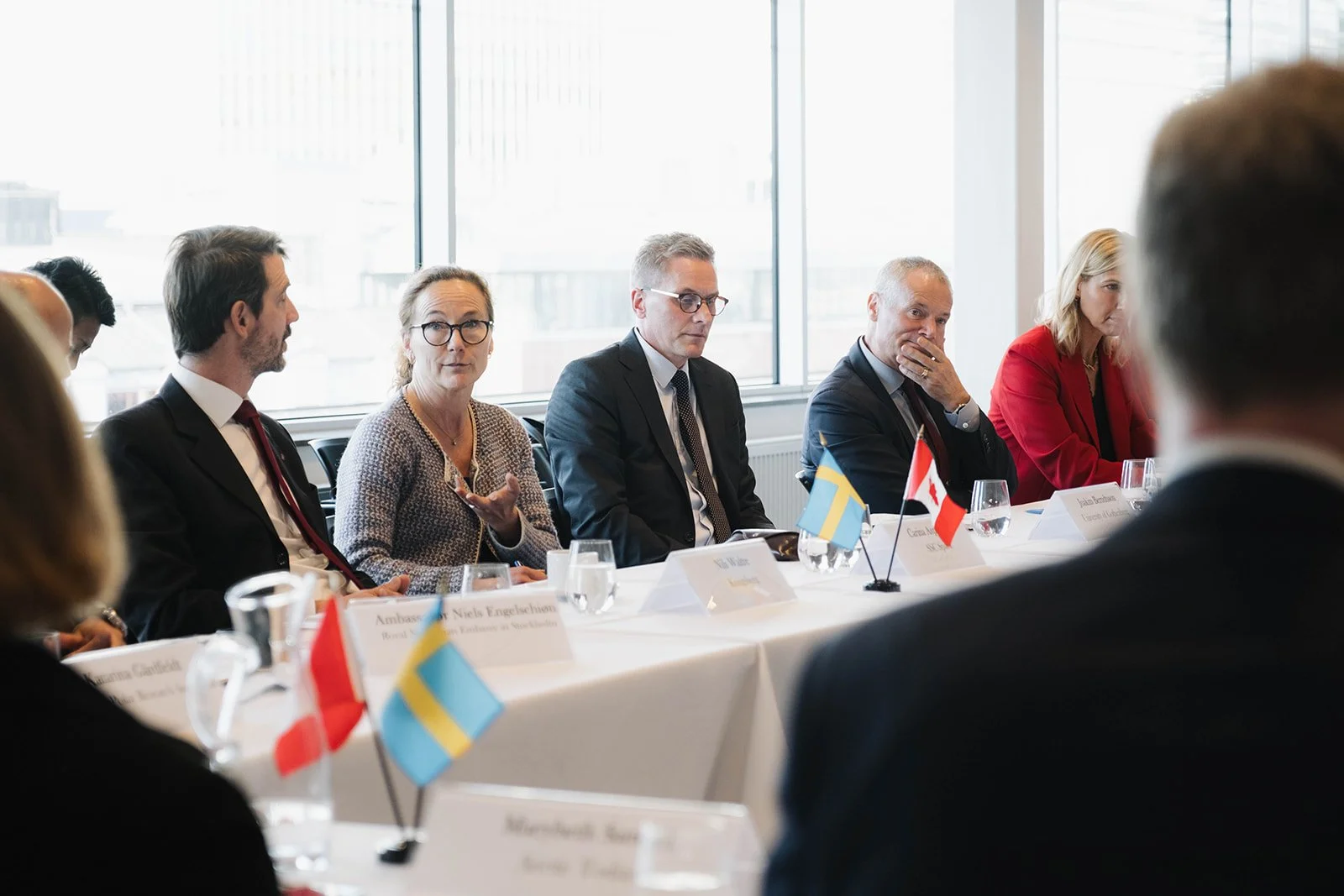
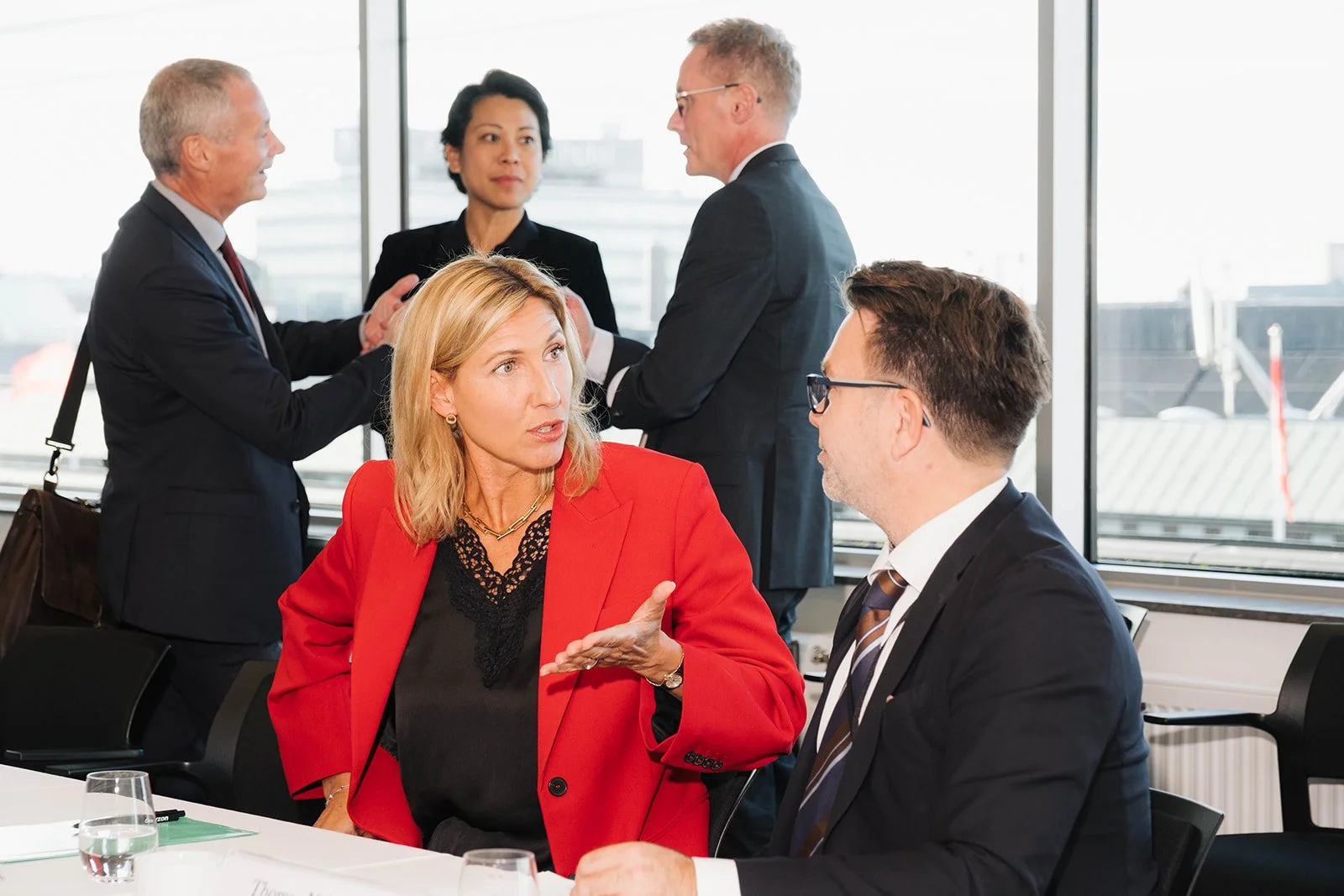
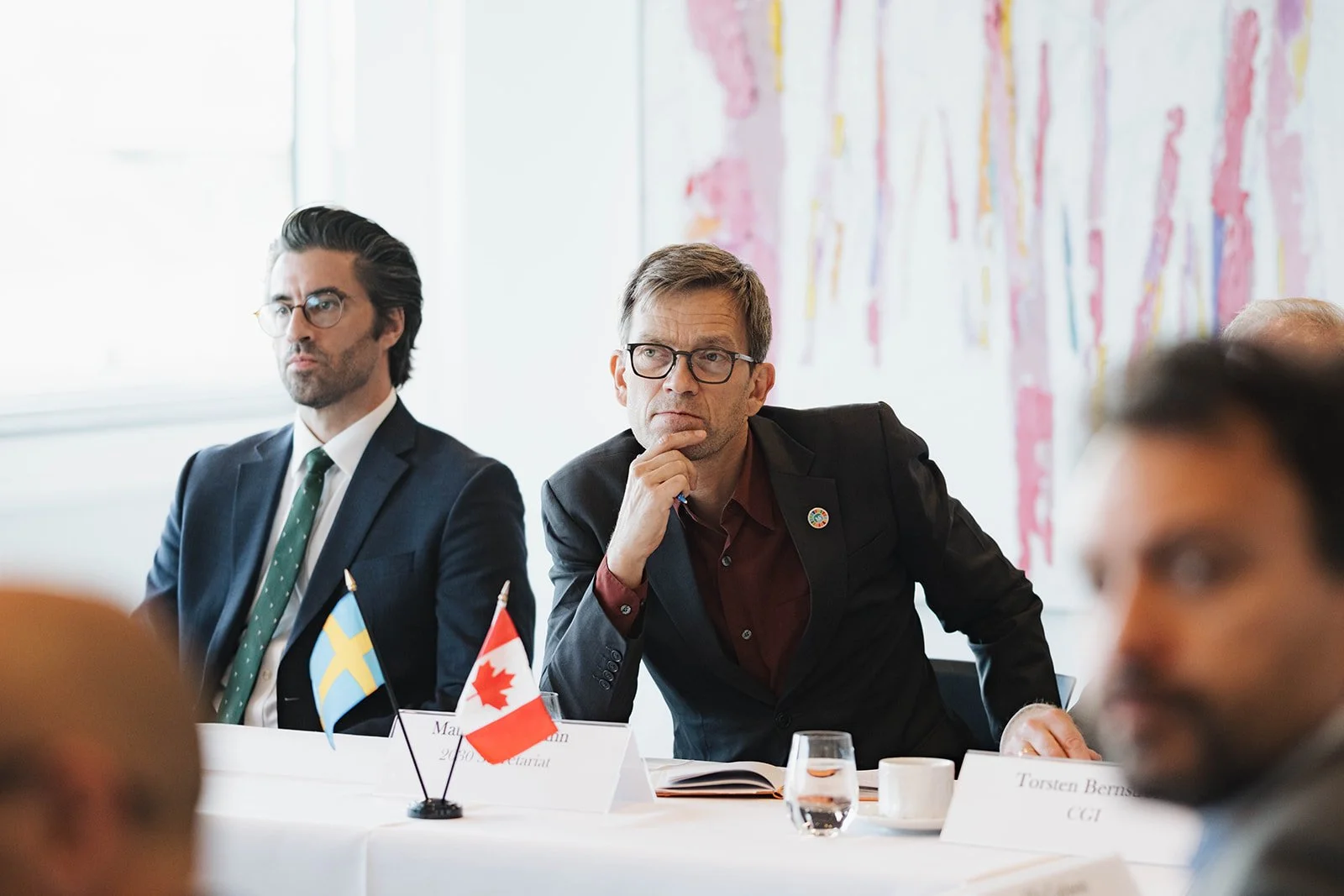
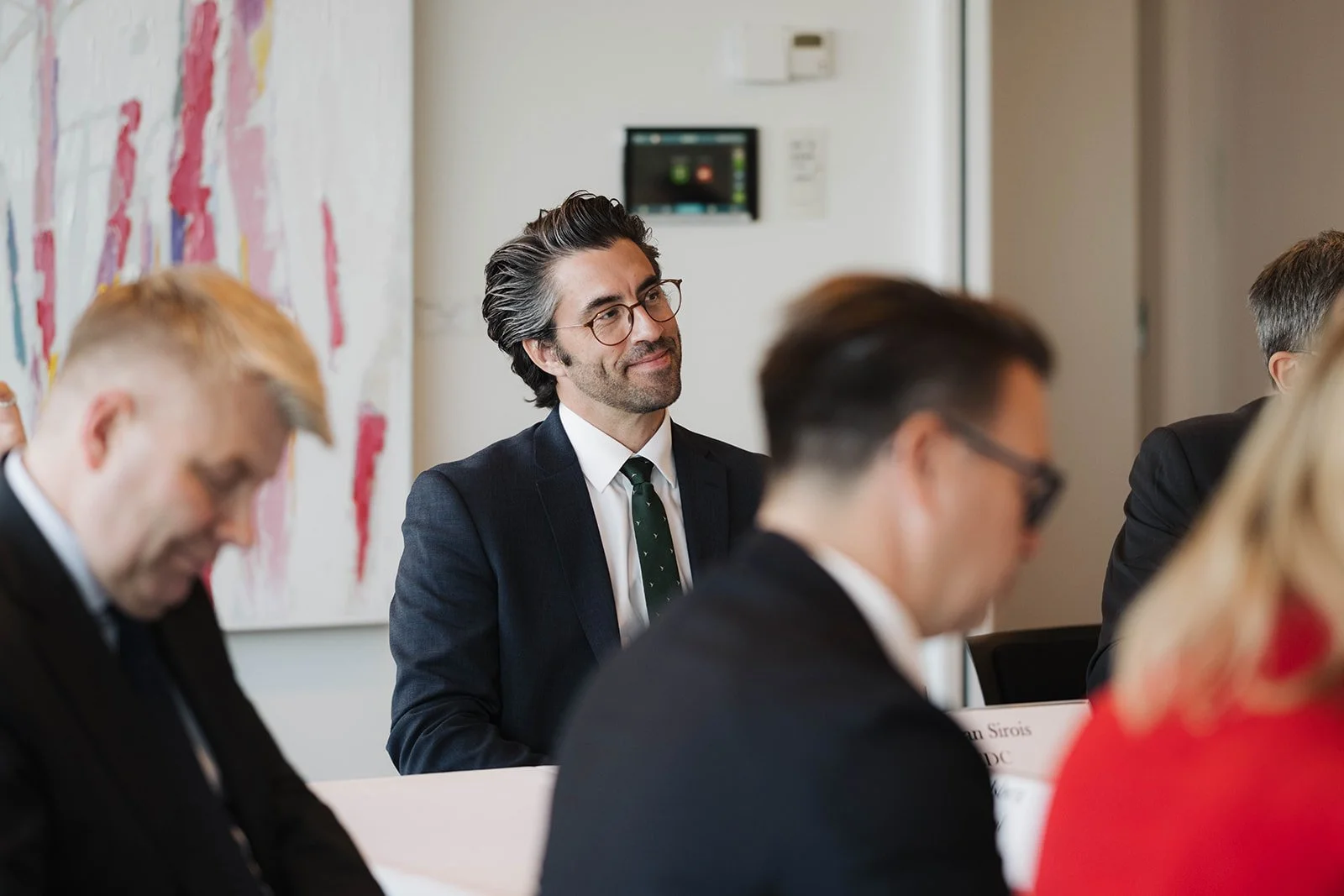
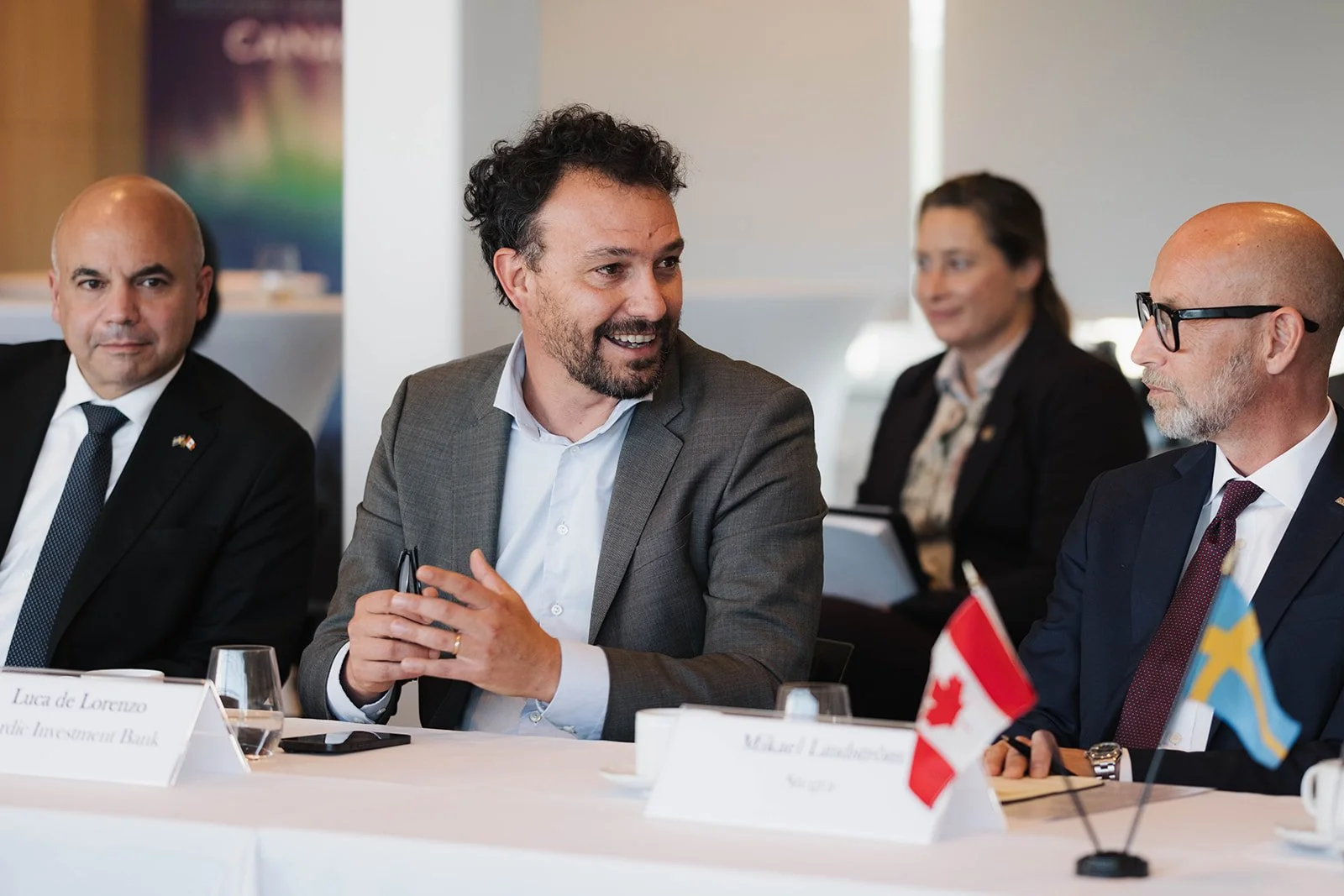
To explore what the Arctic means for business and policy, the Canadian Chamber of Commerce in Sweden brought together over 25 decision-makers from industry, finance, defence, research and government to an Executive Roundtable on September 24. While the conversation was held under the Chatham House Rule, the quotes featured here have been approved for use by their speakers.
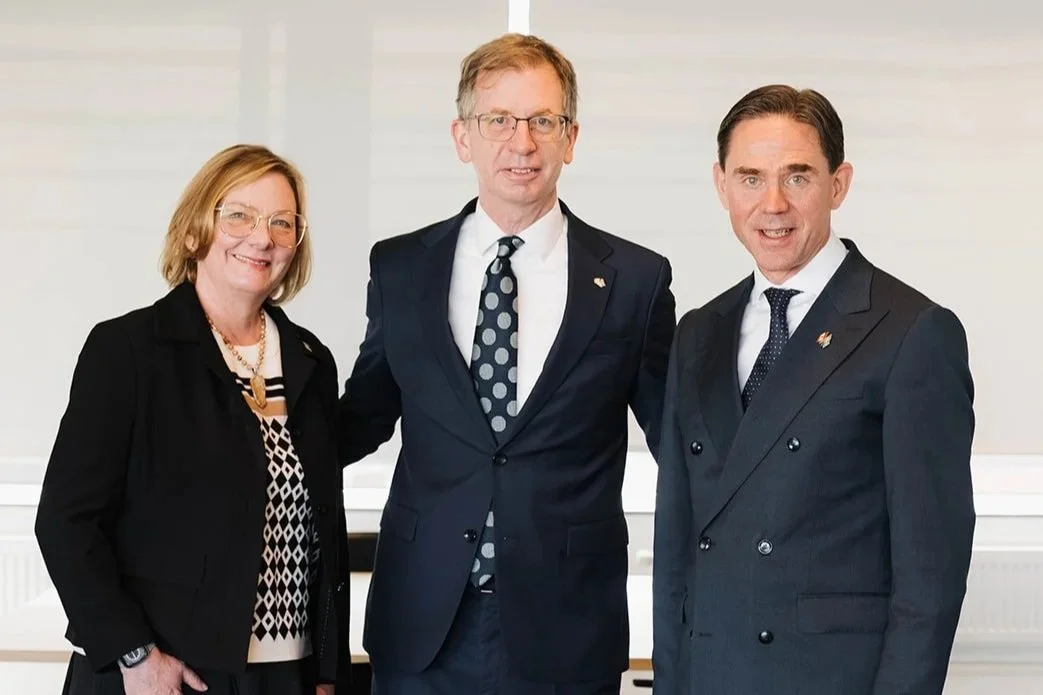
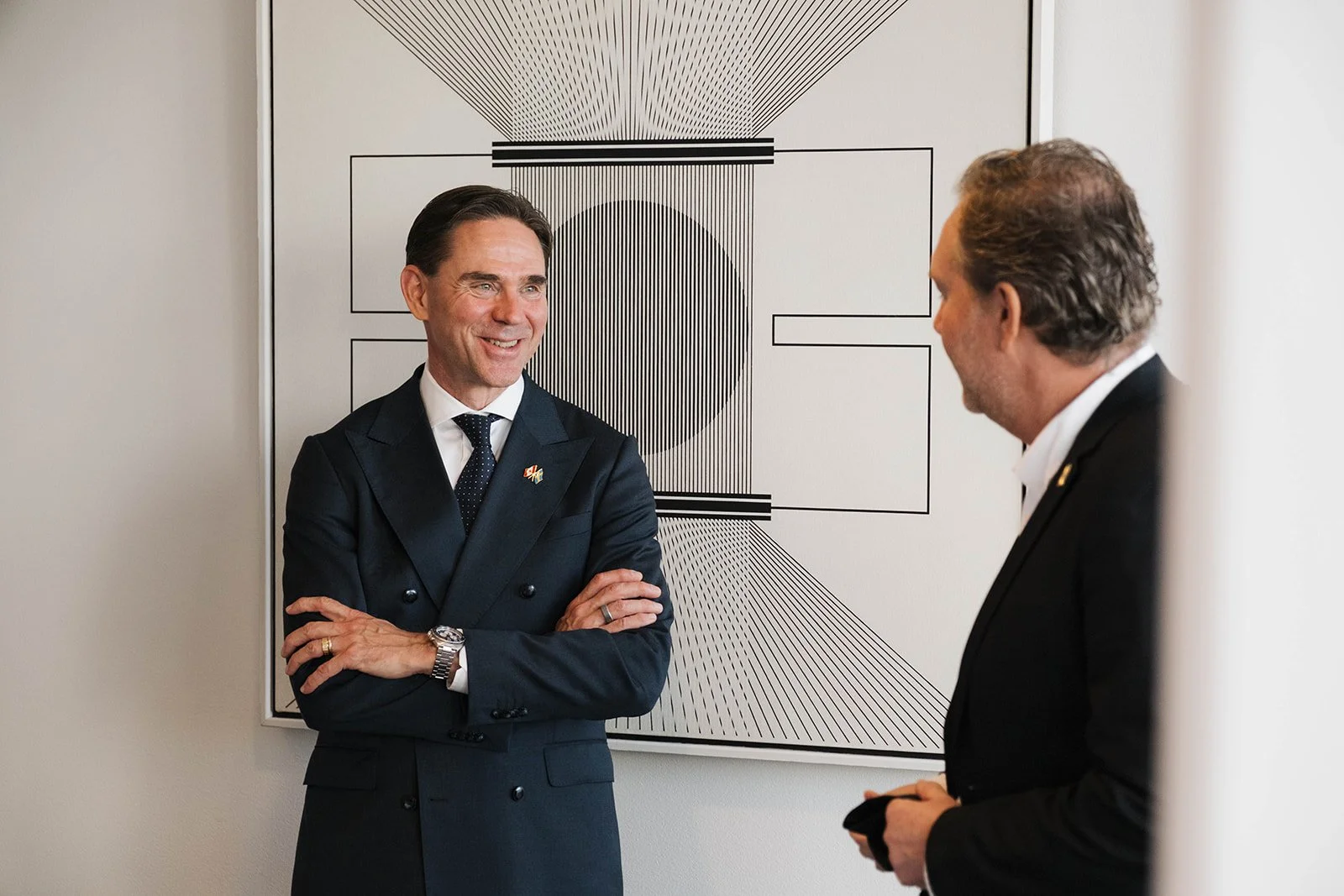
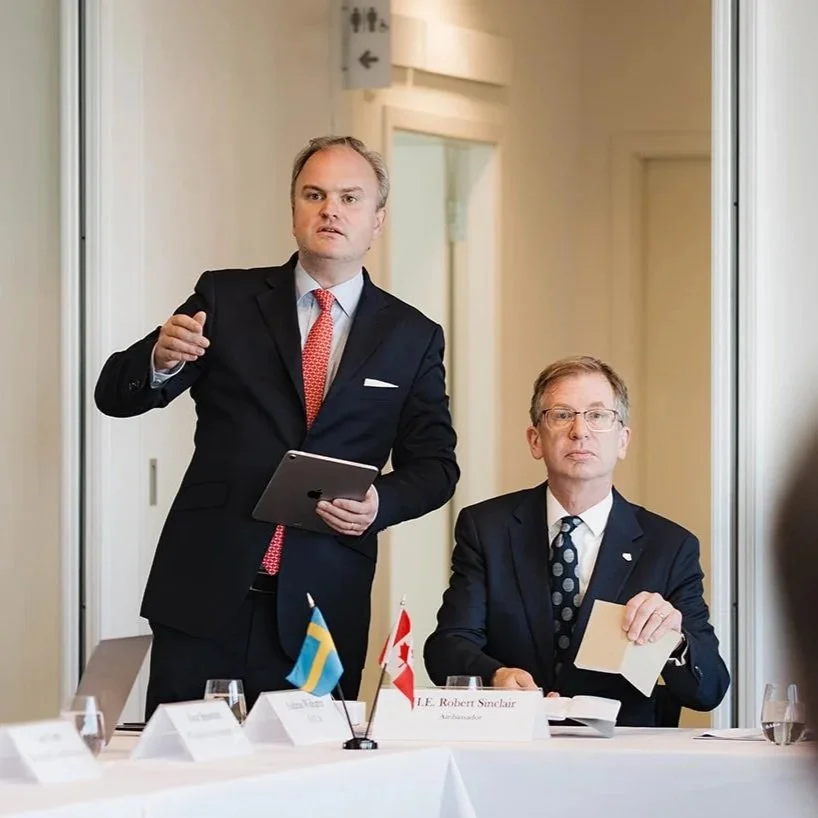
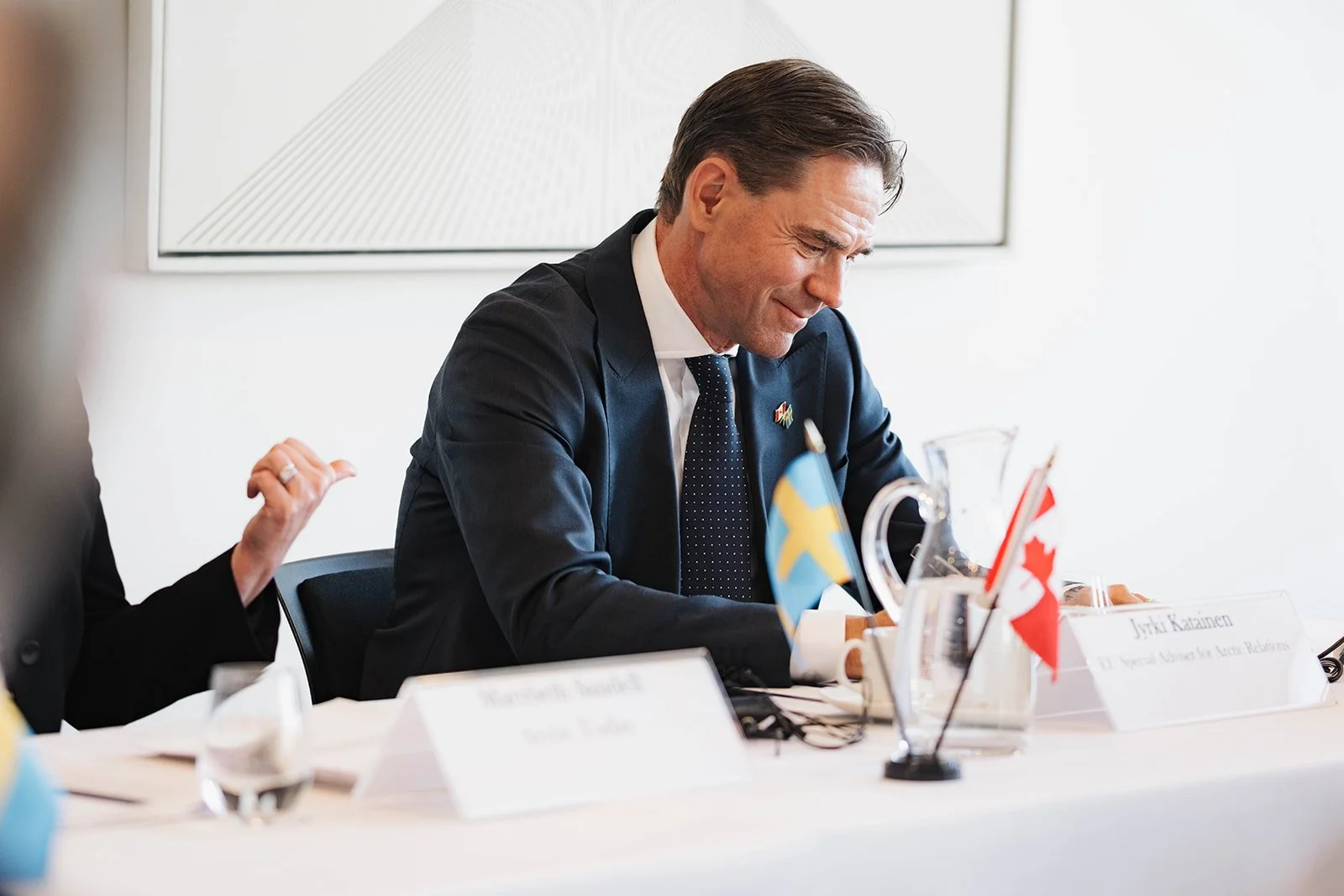
Robert Sinclair, Canadian Ambassador to Sweden and former senior Arctic official, and Jyrki Katainen, Special Advisor for EU-Arctic Relations and former Finnish Prime Minister, led the discussion. Many thanks also to Marybeth Sandell, Editor-in-Chief of the Chamber’s media partner, Arctic Today, who was our moderator for the session.
A homeland, not a frontier
Ambassador Robert Sinclair underlined that Canada’s Arctic covers 40% of its landmass and 70% of its coastline, yet only about 150,000 people live there. Canada’s 2024 Arctic Foreign Policy, developed with Indigenous and northern partners, calls the region a homeland rather than a frontier. It also treats security, sustainability and prosperity as goals that reinforce one another.
Jyrki Katainen, Head of Public Affairs at Nordea, special advisor for EU-Arctic Relations and former Finnish Prime Minister, highlighted that the EU’s new Arctic policy, due shortly, focuses on economic opportunity in the High North as geopolitical tension grows, with particular attention to Greenland and the Nordic countries. Its priorities include shared icebreaking capacity, dual-use transport links such as the rail connection between Finland and Narvik, and processing more critical minerals within the region.
These two positions make the Arctic a natural area for closer cooperation between Canada, Sweden, the wider Nordic region and Europe.
What we heard
1. Enable investments that allow for scale and impact. The strategy is in place, but there are still too few large, bankable projects for investors and companies to act on. Participants called for a pipeline of projects big enough to move the agenda. It was also suggested that the Canada-Sweden Strategic Partnership should be judged on the long-term value of the projects and trade benefits it delivers.
2. Invest in skills and early Indigenous partnership. The employment rate in northern Sweden is high, and the next generation of mining will need new skills. Bringing Indigenous communities and First Nations in early, through education and upskilling, was described as a proven way to create value for a range of stakeholders and keep a social licence to operate. Participants described this as a proven model in the Canadian Arctic.
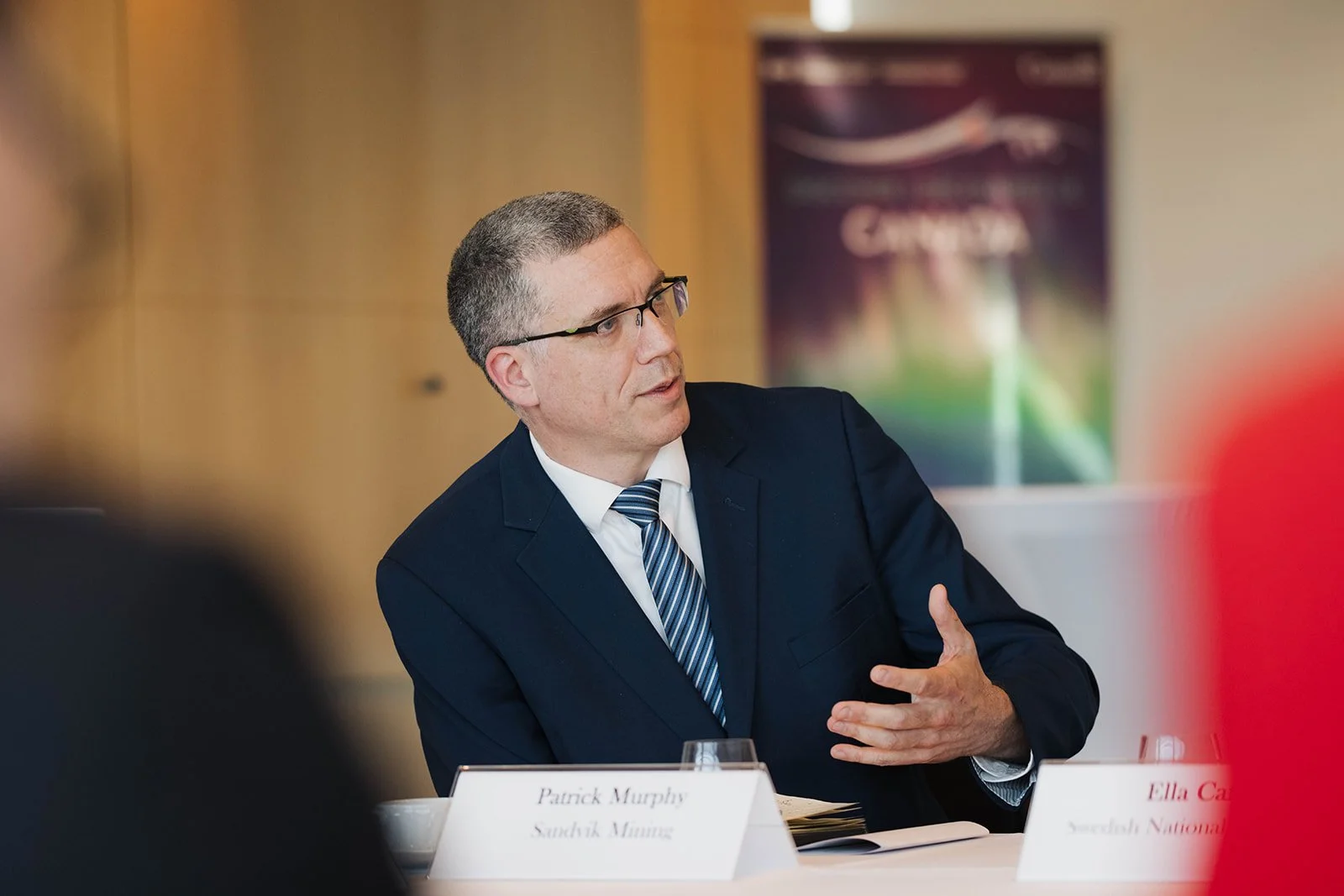
“We have the technology for extraction and processing. To get the most value from it, the key is to involve First Nations early. What we can offer is education and upskilling. There is a huge appetite for collaboration, especially once stakeholders see what’s in it for them. For Sandvik, this is a blueprint that has worked well.”
Patrick Murphy, President, Sandvik Mining
3. Treat the Arctic environment as critical infrastructure. Climate change ranks at the top of the region’s security risks. Participants maintained that environment and security should be planned together, grounded in research and the United Nations Convention on the Law of the Sea (UNCLOS), rather than handled in separate silos, thereby avoiding stovepipe solutions.
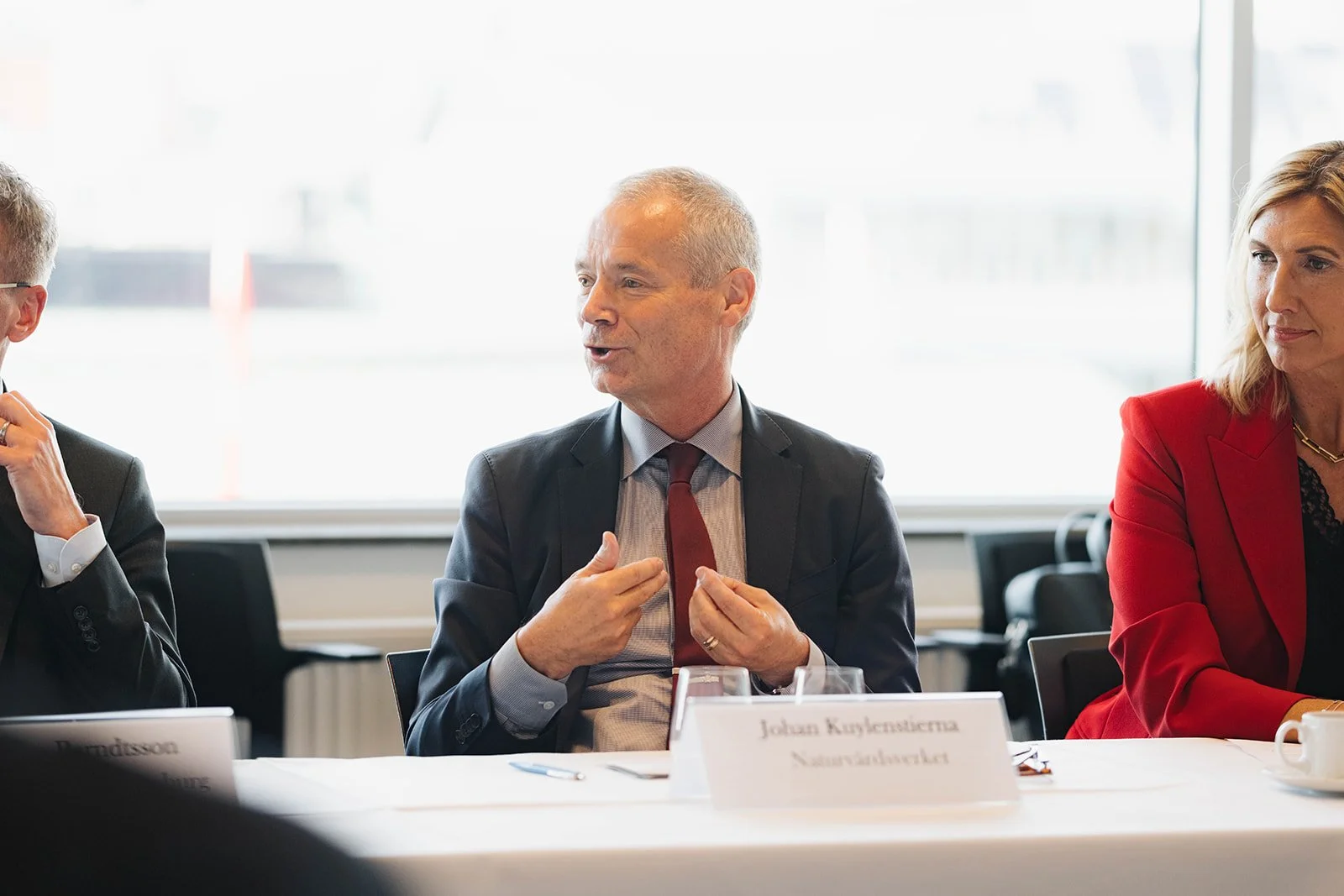
“A stable climate and a healthy environment in the Arctic are prerequisites for investments and business opportunities in the region. The landscape in the Arctic is changing fast, and we are seeing more and more investment in exploring the region. That makes it all the more important to treat the environment as critical infrastructure for the Arctic. Environment and security have to be discussed together, and we need to stop treating them as separate issues.”
– Johan Kuylenstierna, Director General, Naturvårdsverket
4. Make responsible mining viable and make it circular. Permits can take decades, while demand for critical raw materials is growing exponentially. Participants called for faster environmental assessment without lowering standards. They also called for circular models that make use of more of what is extracted.
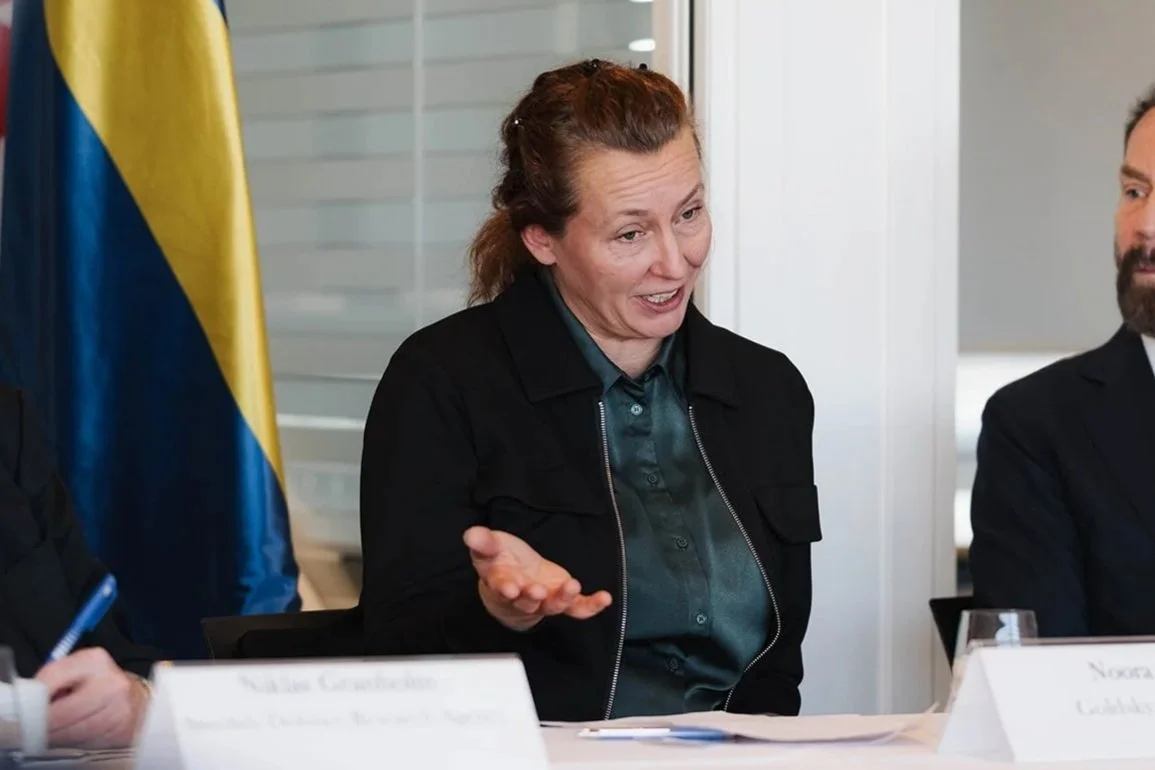
“The environmental assessments of our projects in Sweden and Finland have been ongoing for decades. At the same time, we see exponential growth in the need for raw materials and strategic materials. Delivering them requires investments, but a return on investments is not guaranteed. For resilience, we need a healthy mining business. Rare earths and crucial raw materials are there, but the business case to mine only critical mines isn’t there. Without mining the gold, we could never have the cobalt either.”
– Noora Ahola, Managing Director, Nordics, Goldsky Resources
5. Build dual-use infrastructure through public-private partnerships. Participants increasingly see dual-use and public-private partnership models as the default in the Arctic. This includes space and launch capacity, satellite communications, subsea cables such as Polar Connect, energy supply and surveillance. Projects like these do more than build infrastructure; they bring trusted partners closer together.
Where this leads
The overall message from the room: The Arctic needs to be approached as a whole: security, environment, skills and investment move together. Canada, Sweden and their Nordic and European partners are well positioned to show how it can be done. The Canadian Chamber will carry these insights into the business input into the Canada-Sweden Strategic Partnership. Our thanks go to everyone who took part.
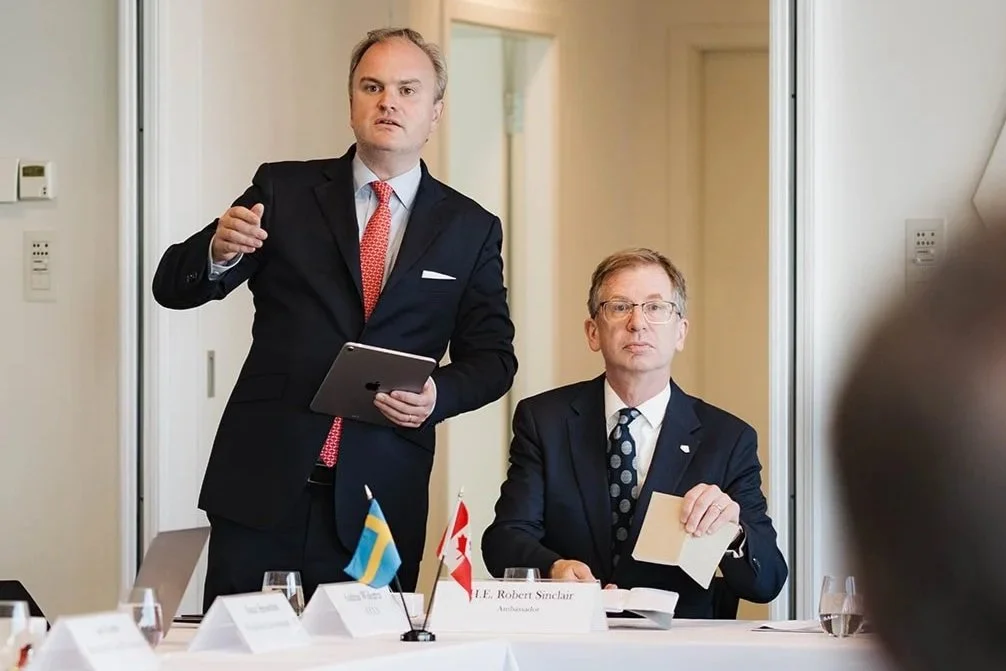
The Canadian Chamber of Commerce in Sweden’s co-chair and roundtable host, Andreas Widegren concluded the meeting with the promise that we’ll be revisiting the Arctic in future Chamber events.