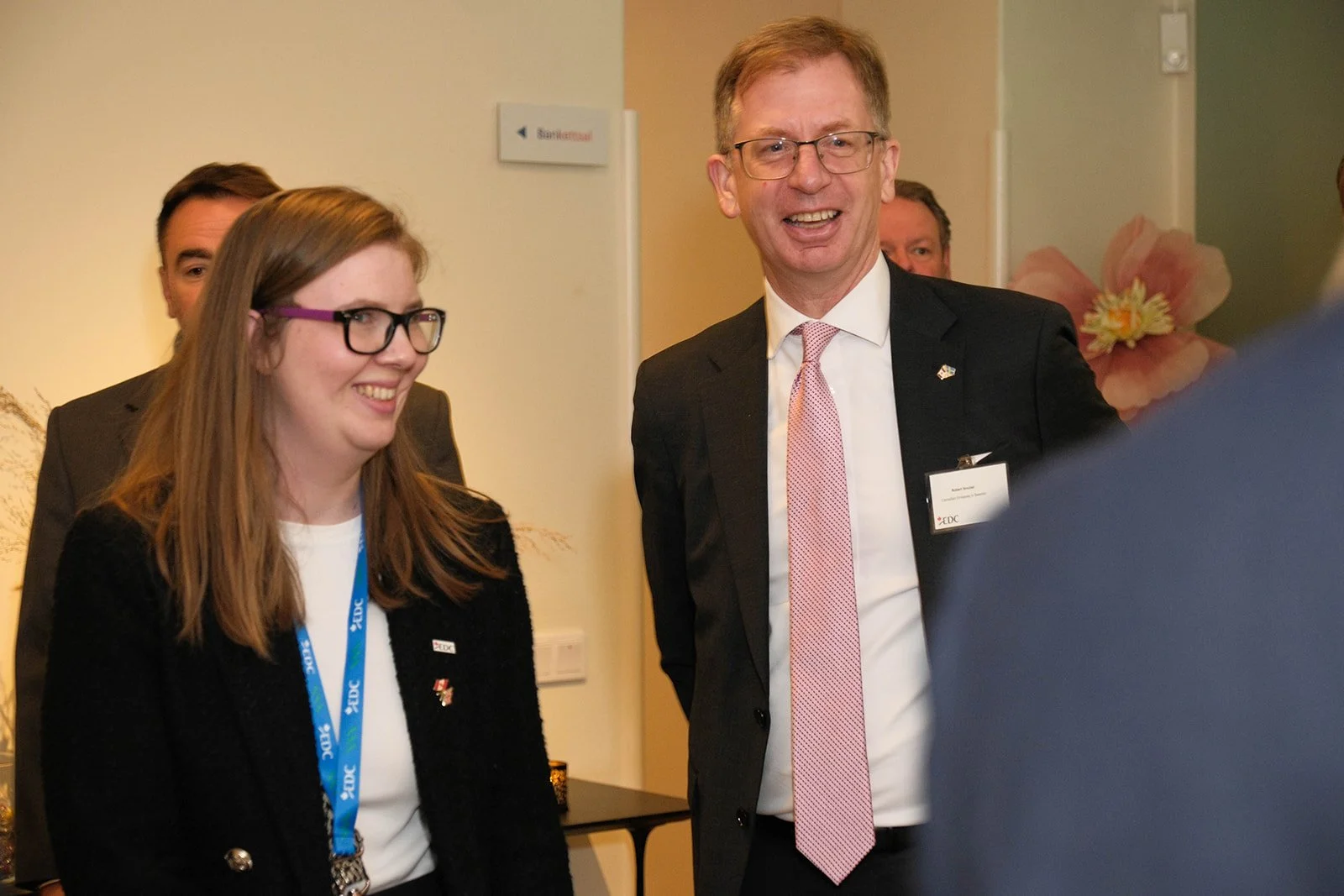
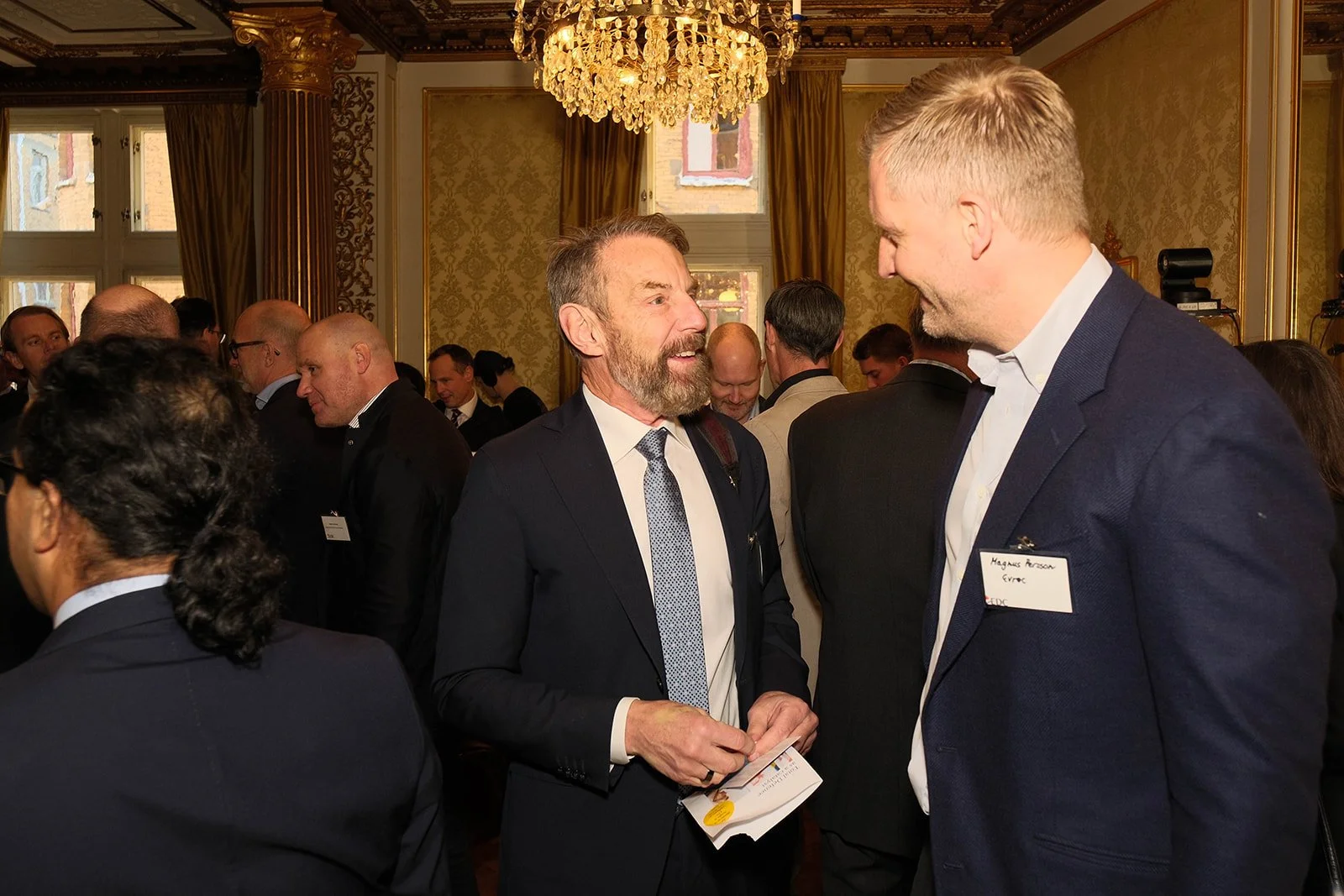
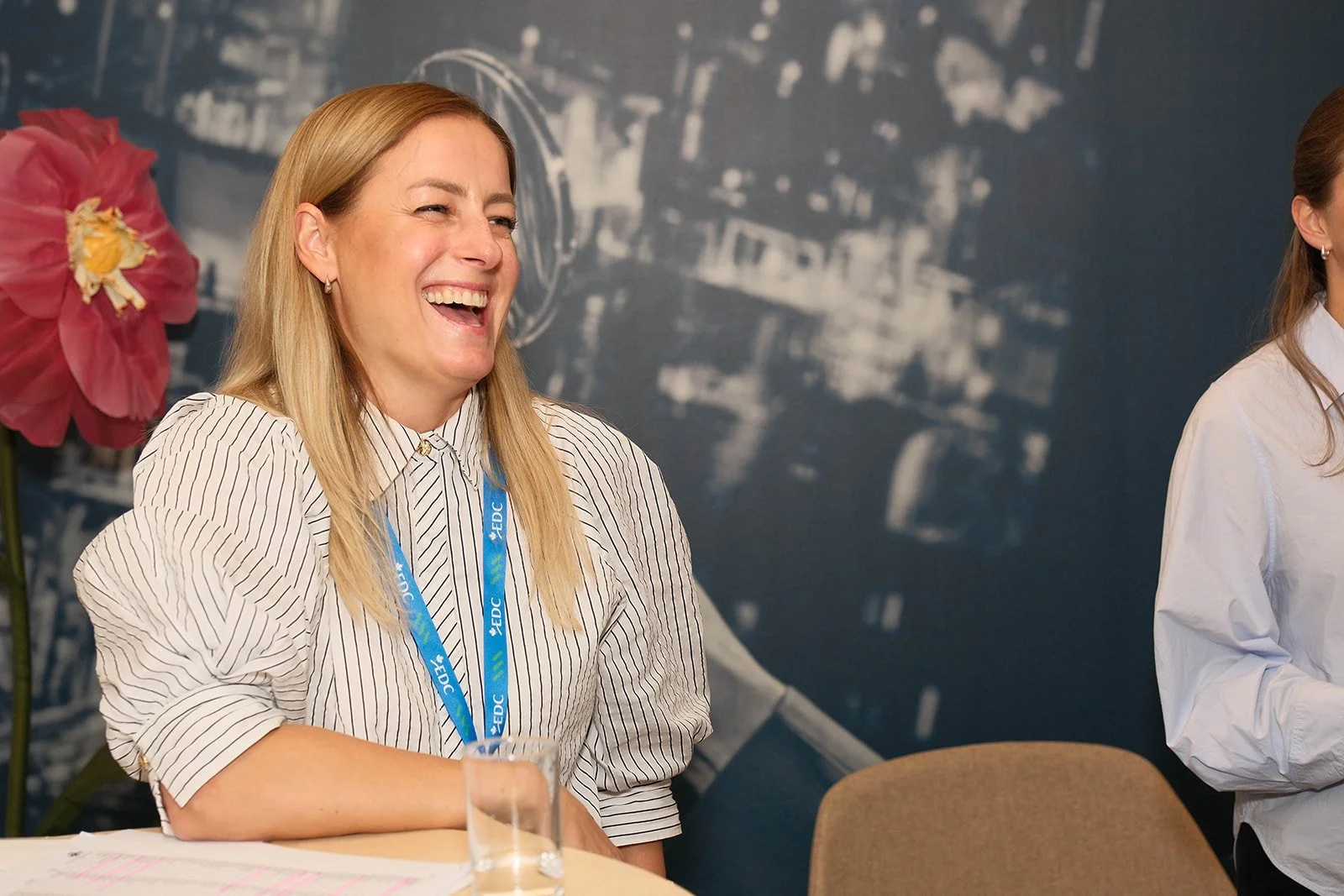
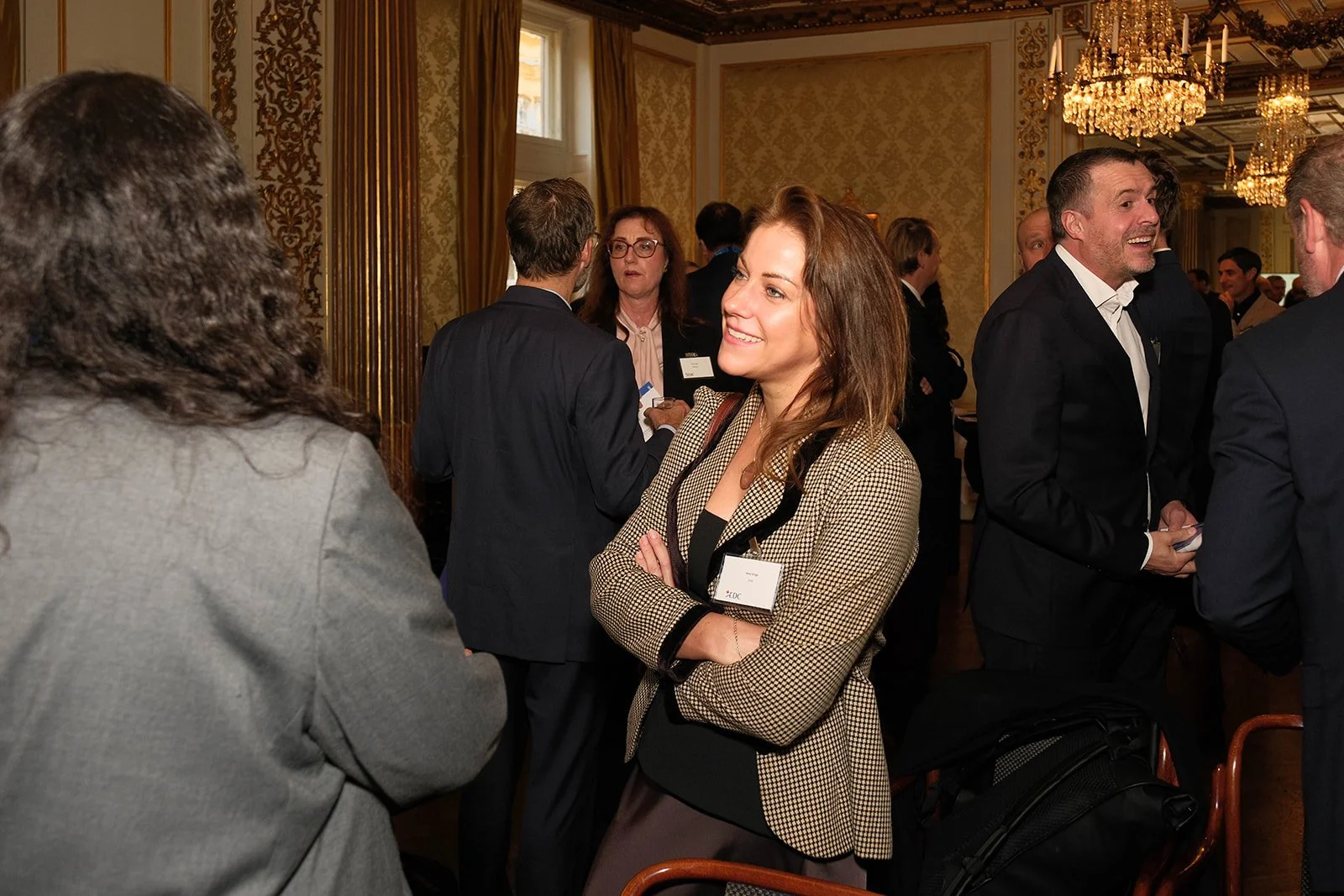
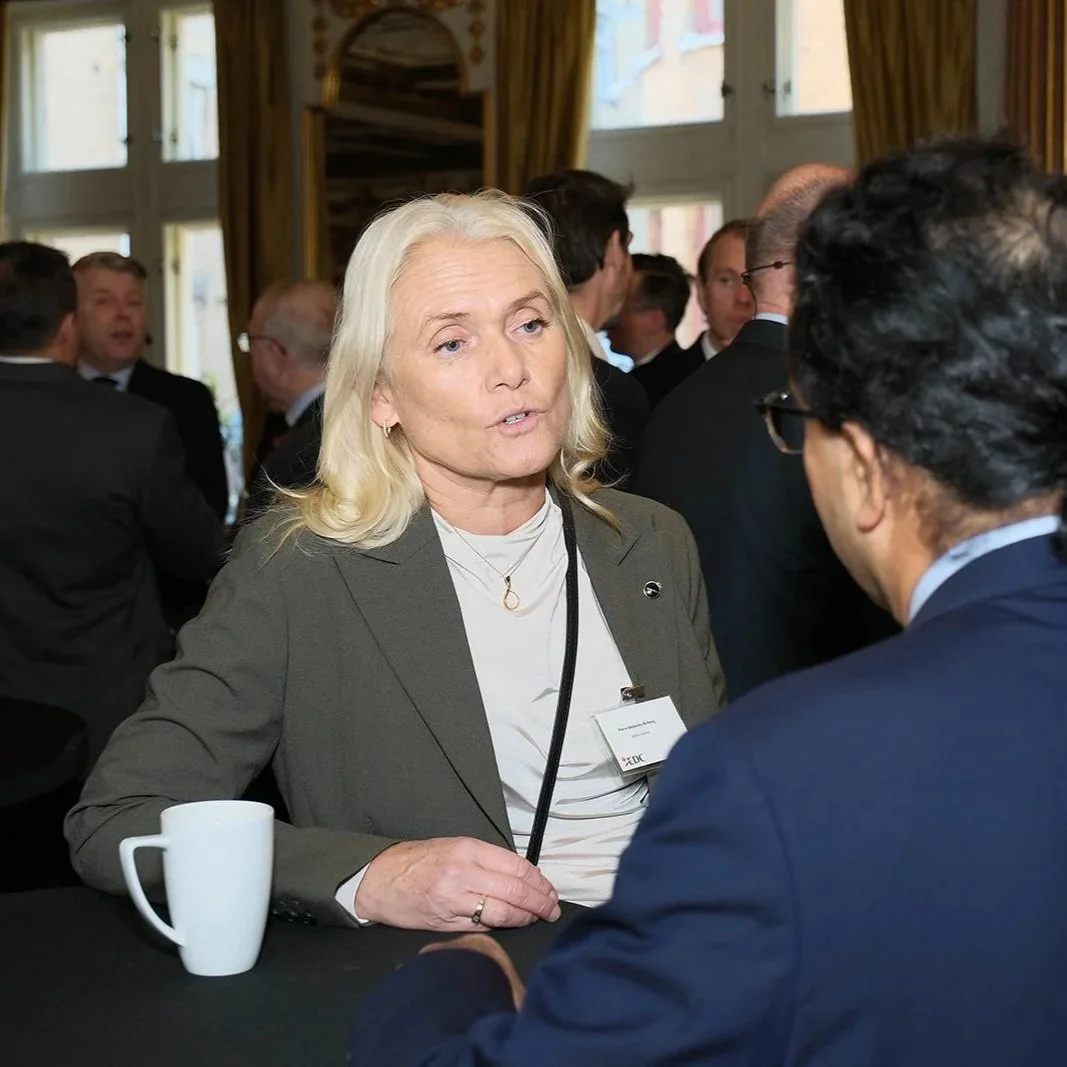
The line between peace and war has blurred. That was the starting point for our October 24 Total Defence panel. Sweden’s resilience depends on companies that can keep delivering when it matters most, and the strengthened partnership between Canada and Sweden opens new ways to do that. Leaders from Saab, WSP, Nokia and AstraZeneca shared what it takes.
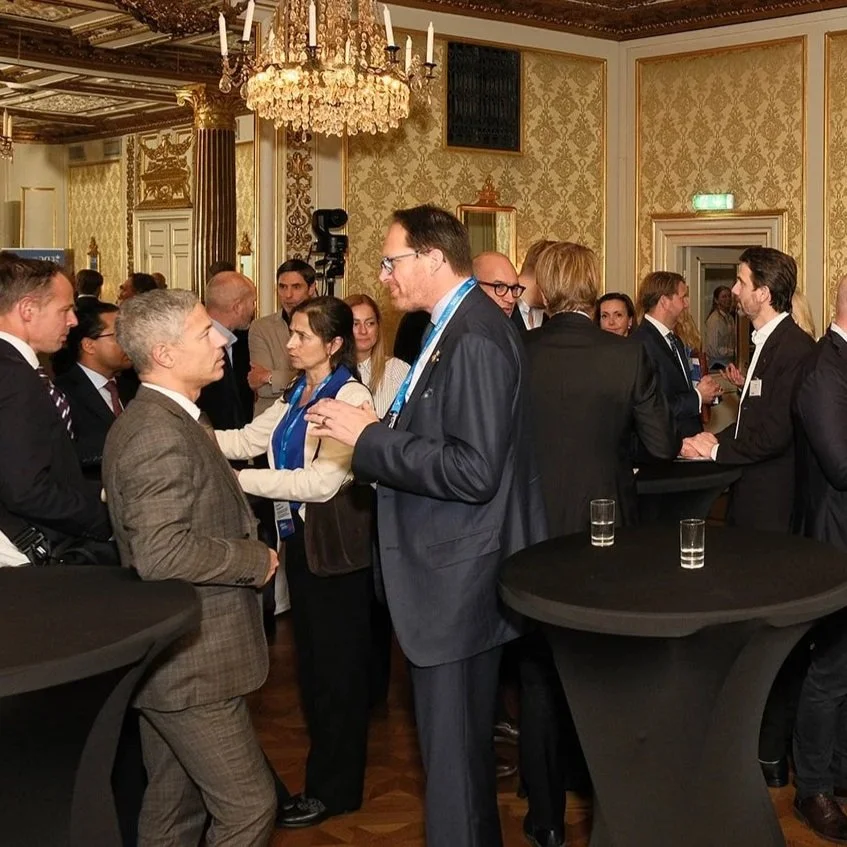
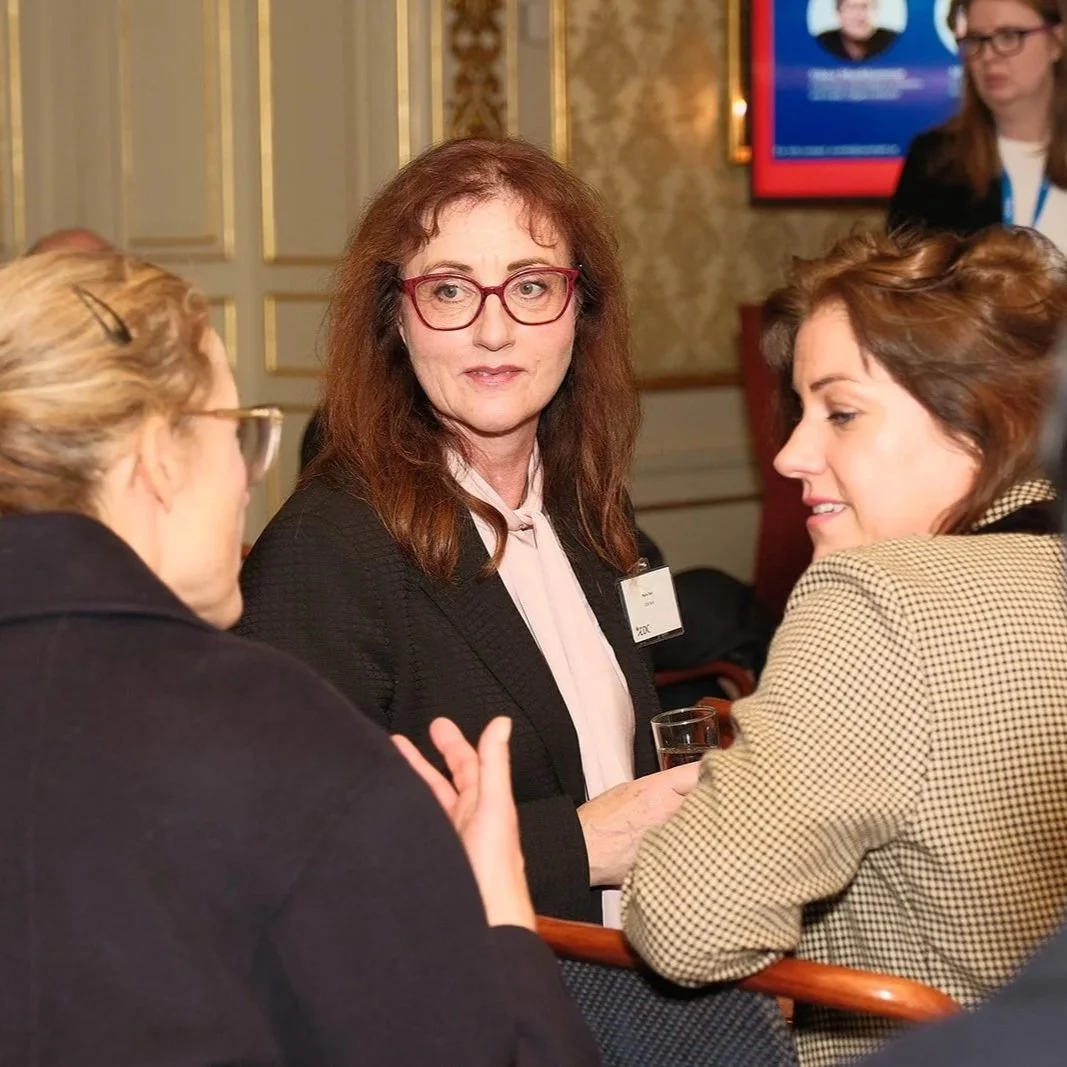
That was the starting point for the Total Defence panel we co-hosted last week with Export Development Canada and the Embassy of Canada in Sweden. The room was full of senior representatives from Nordic businesses across sectors
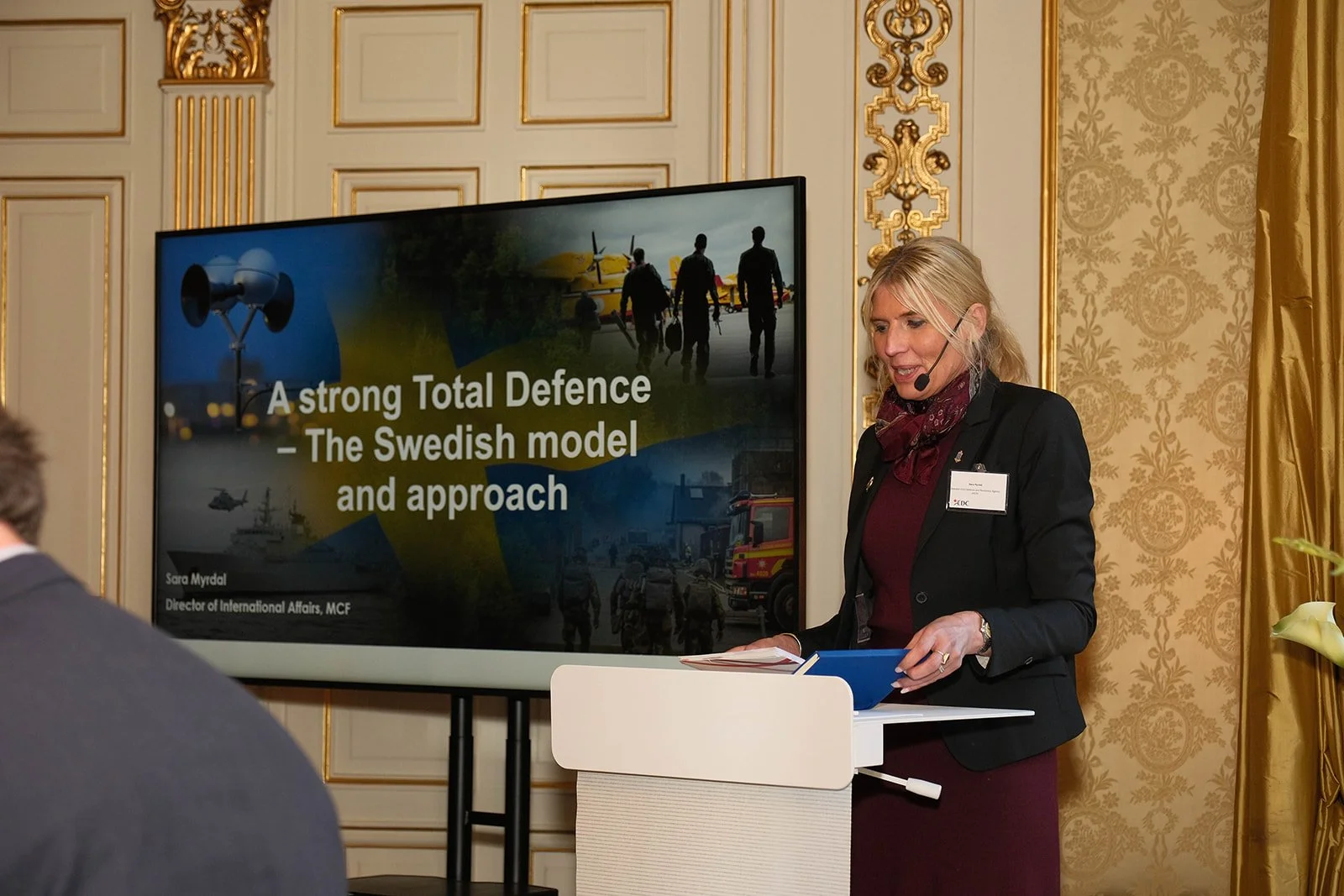
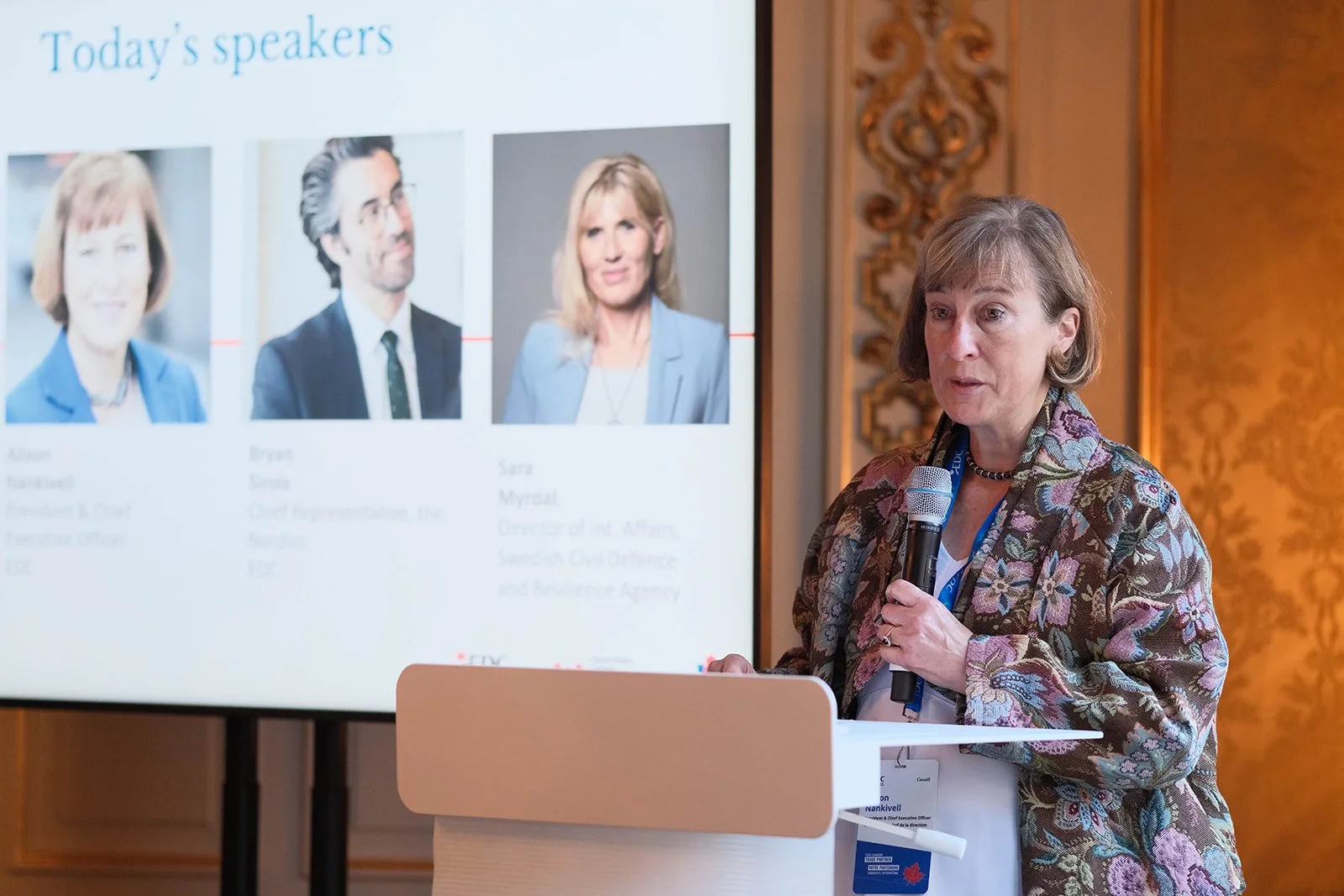
Sara Myrdal of the Swedish Civil Defence and Resilience Agency, set the scene. The security situation is the most serious since the WW2, and with hybrid warfare part of our lives. We’ve learned from Ukraine that civilian infrastructure is a deliberate target, as part of the aim to weaken public willingness to support. Add more frequent natural disasters, and you have a threat picture that touches every company with its people, sites and value chains. It is also an area where Canadian and Swedish business can strengthen collaboration.
An old idea, rebuilt for today
Total defence is not new to Sweden. The concept dates back to the wake of WW2: encompassing military, civil and psychological defence. But much of that system was dismantled after the Cold War. The rebuild began in 2015, accelerated after the full-scale invasion of Ukraine.
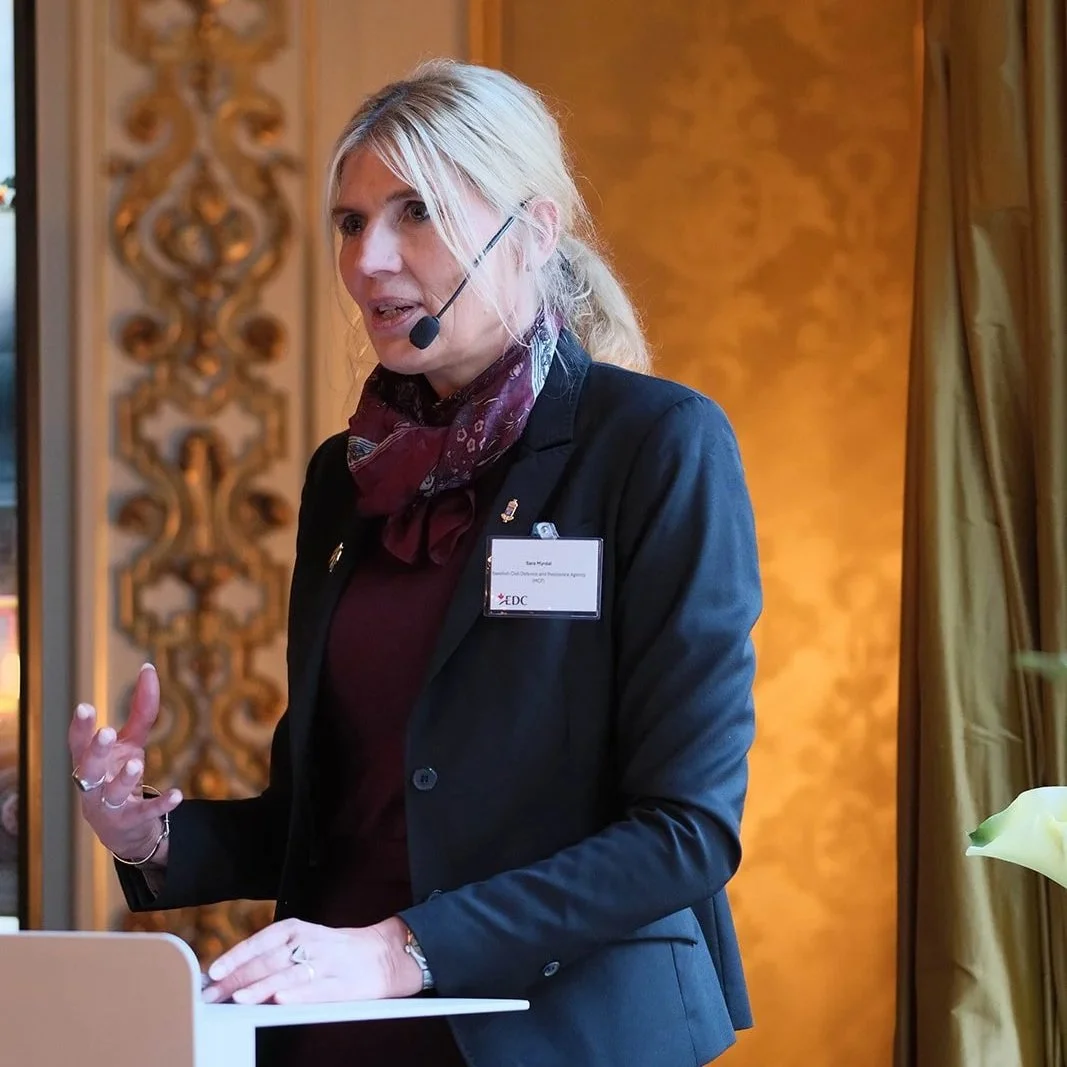
“What we face today is more complex than anything since WW2, and it lives in the ambiguity between peace and war.”
– Sara Myrdal, Director of International Affairs, Head of Department for International Relations, Research and Innovation, Swedish Civil Defence and Resilience Agency
The ambition is that 5% of GDP is directed to defence by 2030, with 1.5% for civil resilience and infrastructure. A new Civil Defence and Resilience Agency under the Ministry of Defence coordinates civil defence and security of supply, and civil defence regions give public and private actors formal ways to work together. Everyone is expected to be ready to contribute, including every level of government, every sector, civil society and every individual between the ages of 16 and 70.
The model now is to develop flexible capacity, built together with business. This input is an integrated part of planning and 12 sectors have been defined as especially critical.
Sweden's revised role
NATO membership changed Sweden's role. Sweden's main role is as a transit and basing country, which makes harbours and the routes running north and east critical. Military and civilian needs for the same ports, roads and networks have to be deconflicted, and that will take creative solutions from industry.
What is expected of companies, with focus on the 12 sectors that are most crucial to total defence.
Continuity planning
Secure backup systems
Clear staffing requirements, with regular training and exercises
Where Swedish Canadian opportunities are
The panel was clear that preparedness is also a market opportunity for both Swedish and Canadian business:
Cold-weather mobility
Connectivity in the High North
Repair of infrastructure on land and at sea
New business models, such as preparedness offered as a subscription that keeps pace with technology.
Listen, learn and adapt.
Listen, learn and adapt. This is the lesson from Ukraine. Question your own choices, because today's solutions will not work tomorrow. Feedback loops are short in digitalisation, longer in defence and longer still in the public sector. Each sector needs to think outside its box. Here are some key takeaways:
Be curious about your neighbour. AZ’s Anders put it well: we are a bit shy in Sweden. He recommends that every business reach out, including beyond its own sector.
We should think as one cohesive market. “Put on NATO glasses, call it the High North, and see the Nordics as one market.” Today even the Nordic countries have separate requirements. A common set would help industry deliver faster, and would help make the single market a reality for defence.
Balance the local and the global. Security of supply needs trusted local capacity, but no country can do it alone.
Resilience is no longer a defence-sector topic. It is a board topic. How far has your organisation come?
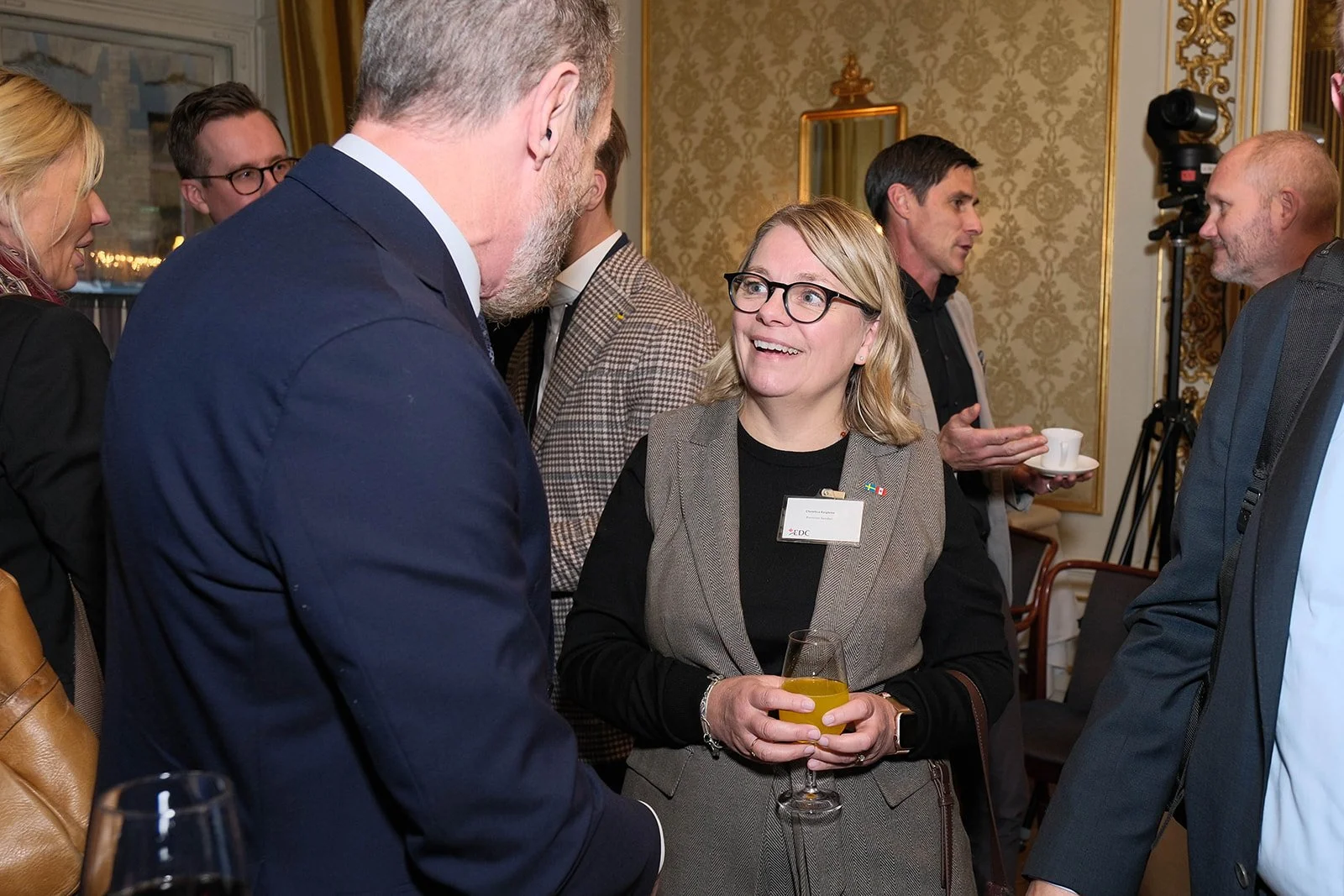
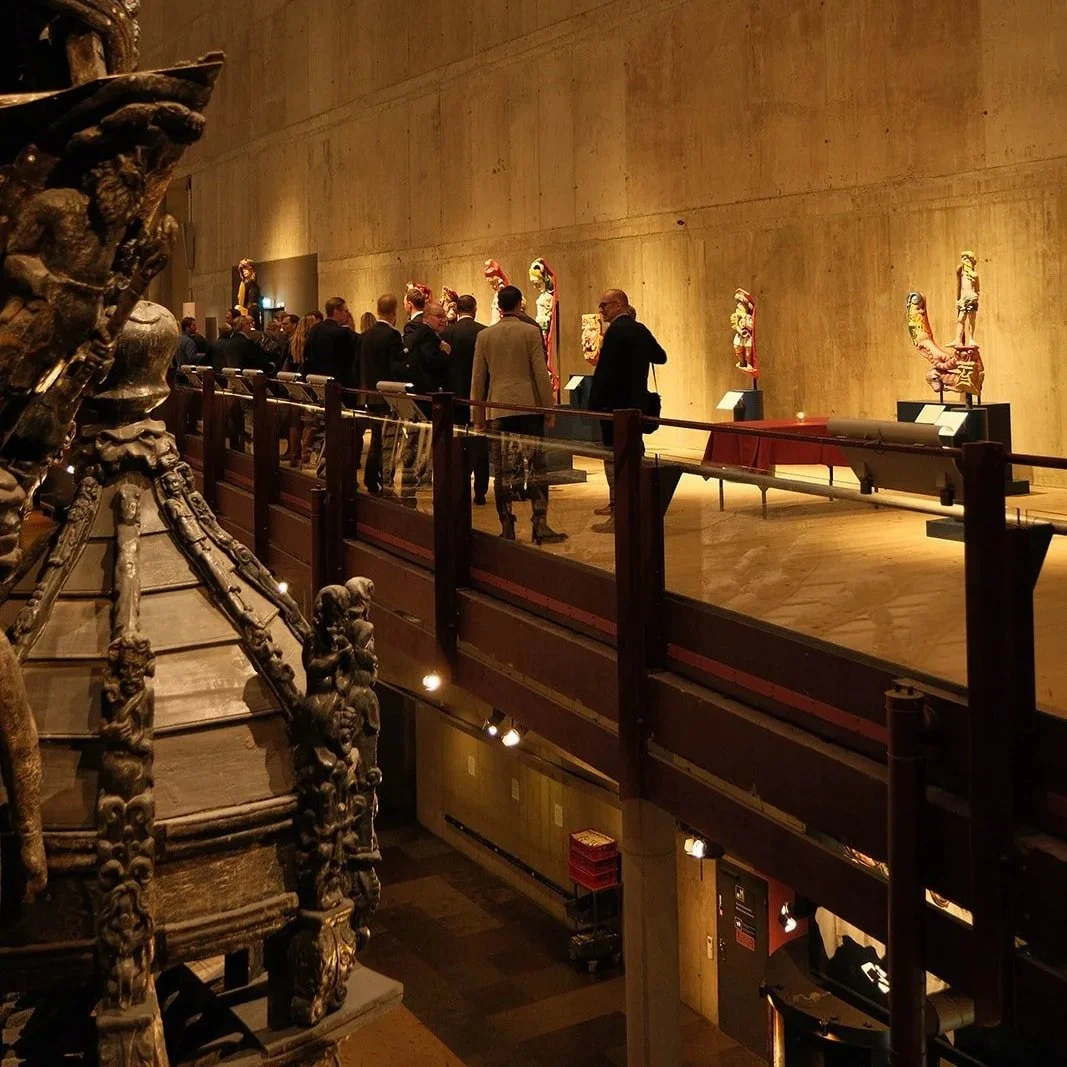
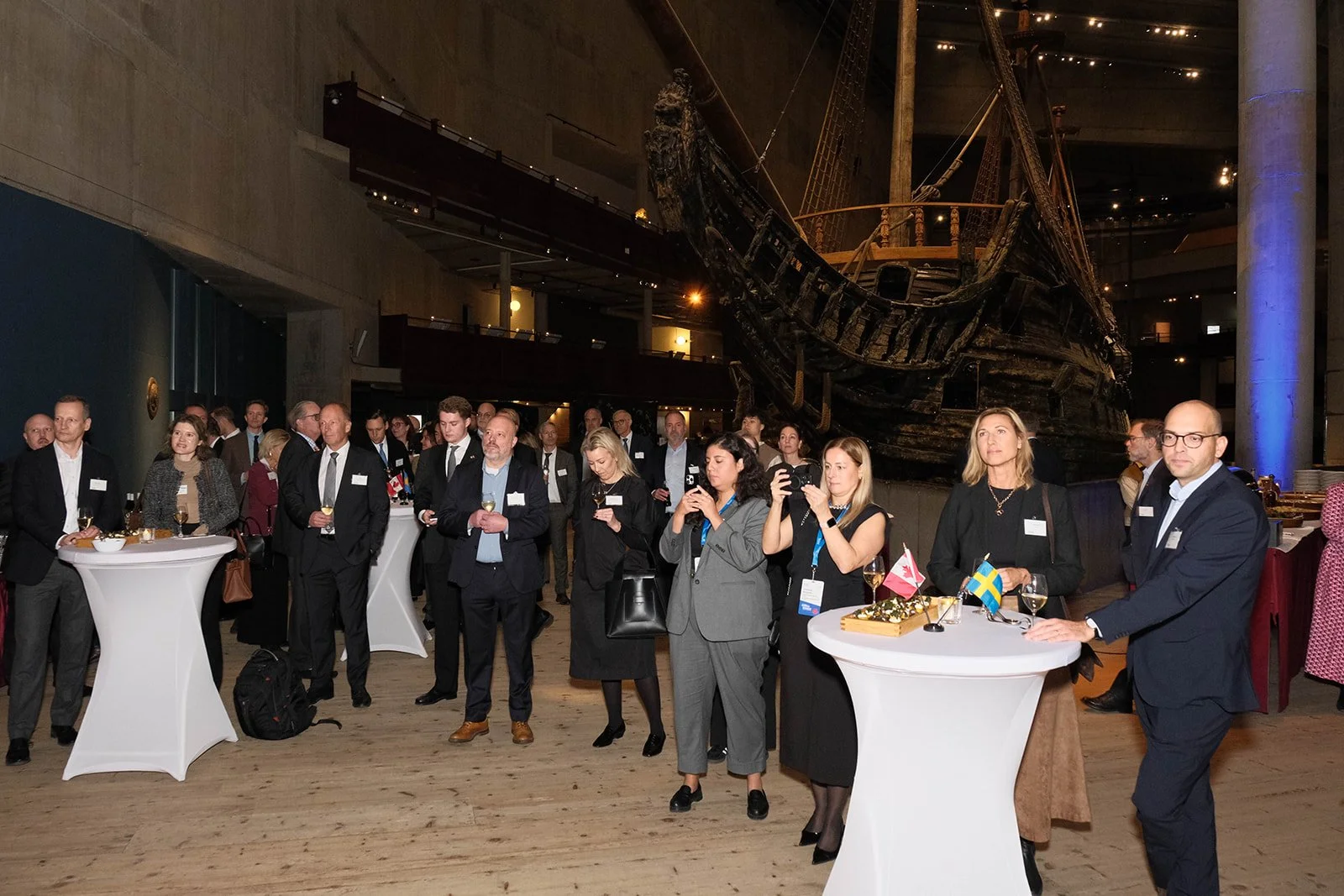
And the grand finale? The event also marked Export Development Canada’s new Nordic home, so we celebrated in Nordic style, with a reception in the shadow of the great warship Vasa. Nearly 400 years old and standing tall, it was a fitting backdrop for a day all about resilience. Thank you, EDC, for an unforgettable night and your amazing generosity!
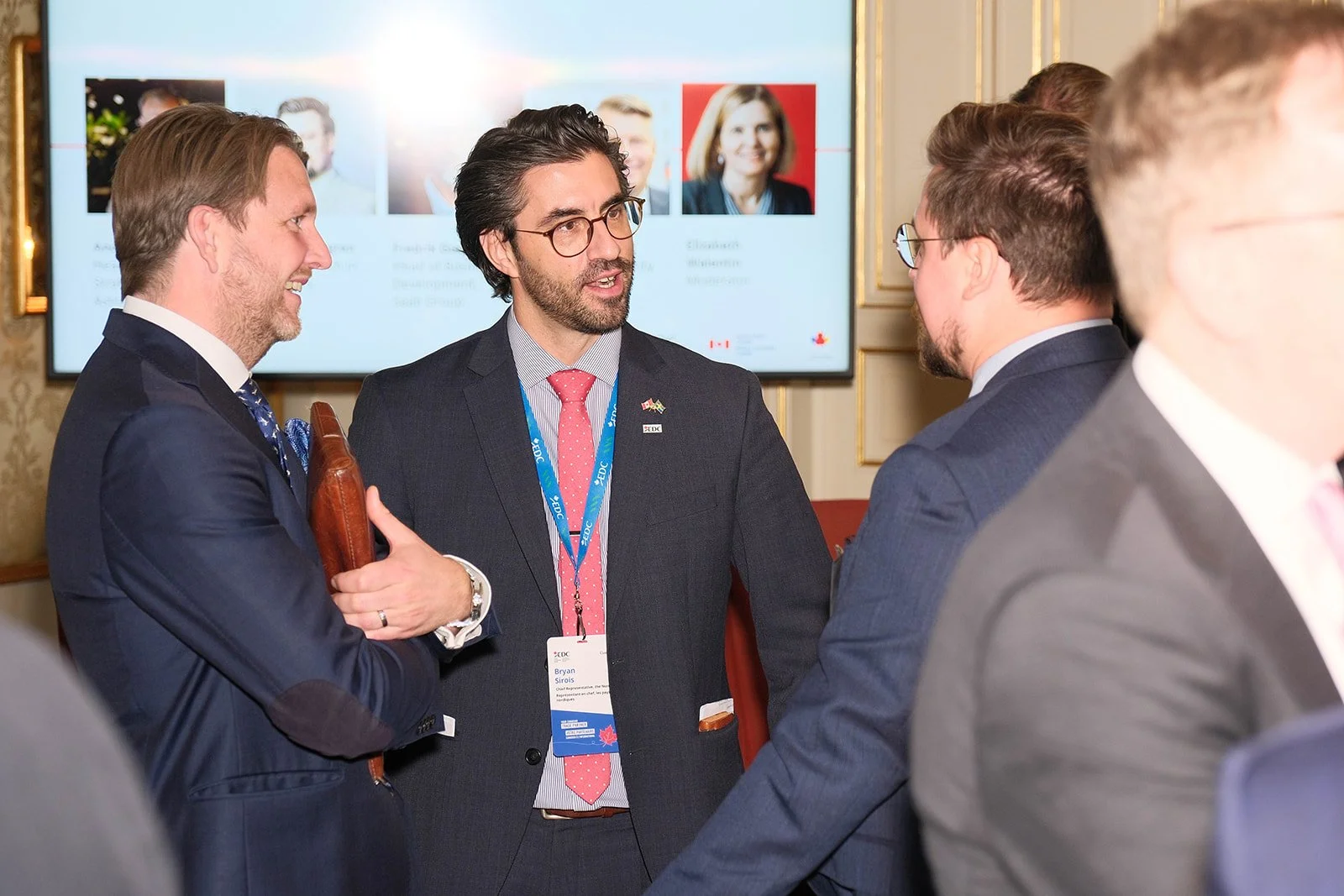
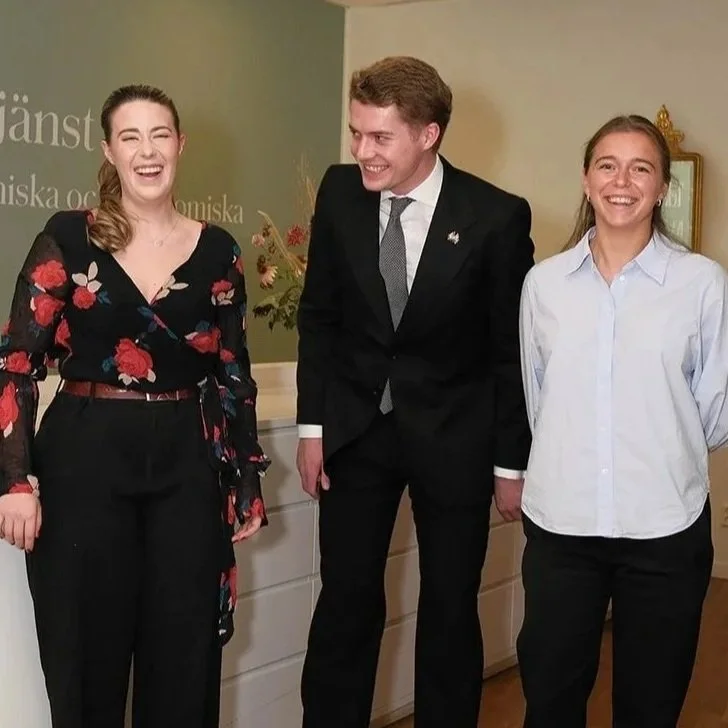
A big shout-out to our speakers and people and organizaitons that made the event happen: Robert Sinclair, Canadian Ambassador to Sweden, Alison Nankivell President & Chief Executive Officer, and Bryan Sirois, Chief Representative, the Nordics both of Export Development Canada, and our panel moderator, Elizabeth Walentin and all our Chamber members. Our support on the ground: Elise Teare, Adam Purd’homme and Cassandra von Schmeling. Export Development Canada, Embassy of Canada in Sweden.
Thank you!!
Curious to read more? Check out the MCF’s brochure, Preparedness for businesses : In case of crisis or war
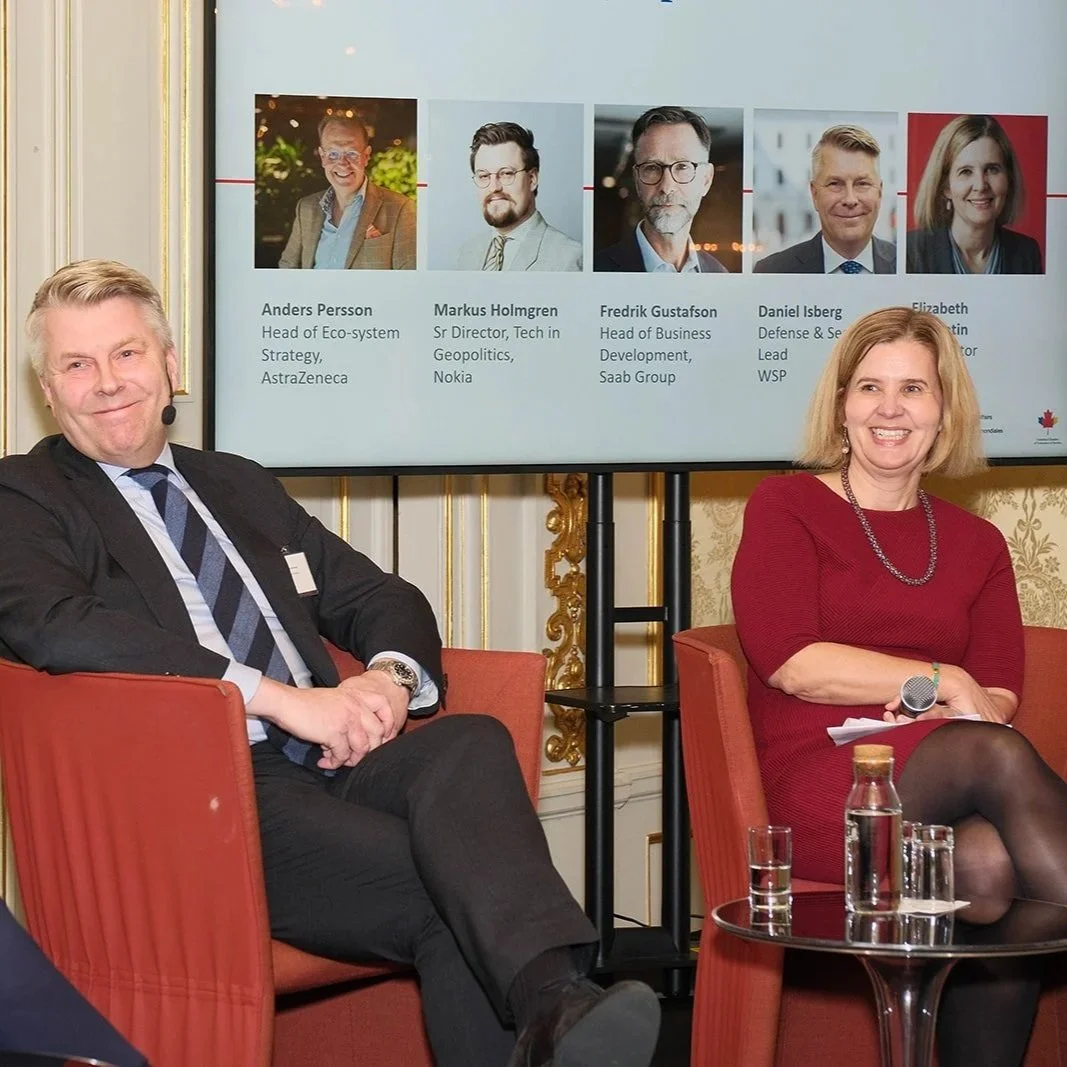
Our panel: Voices from industry
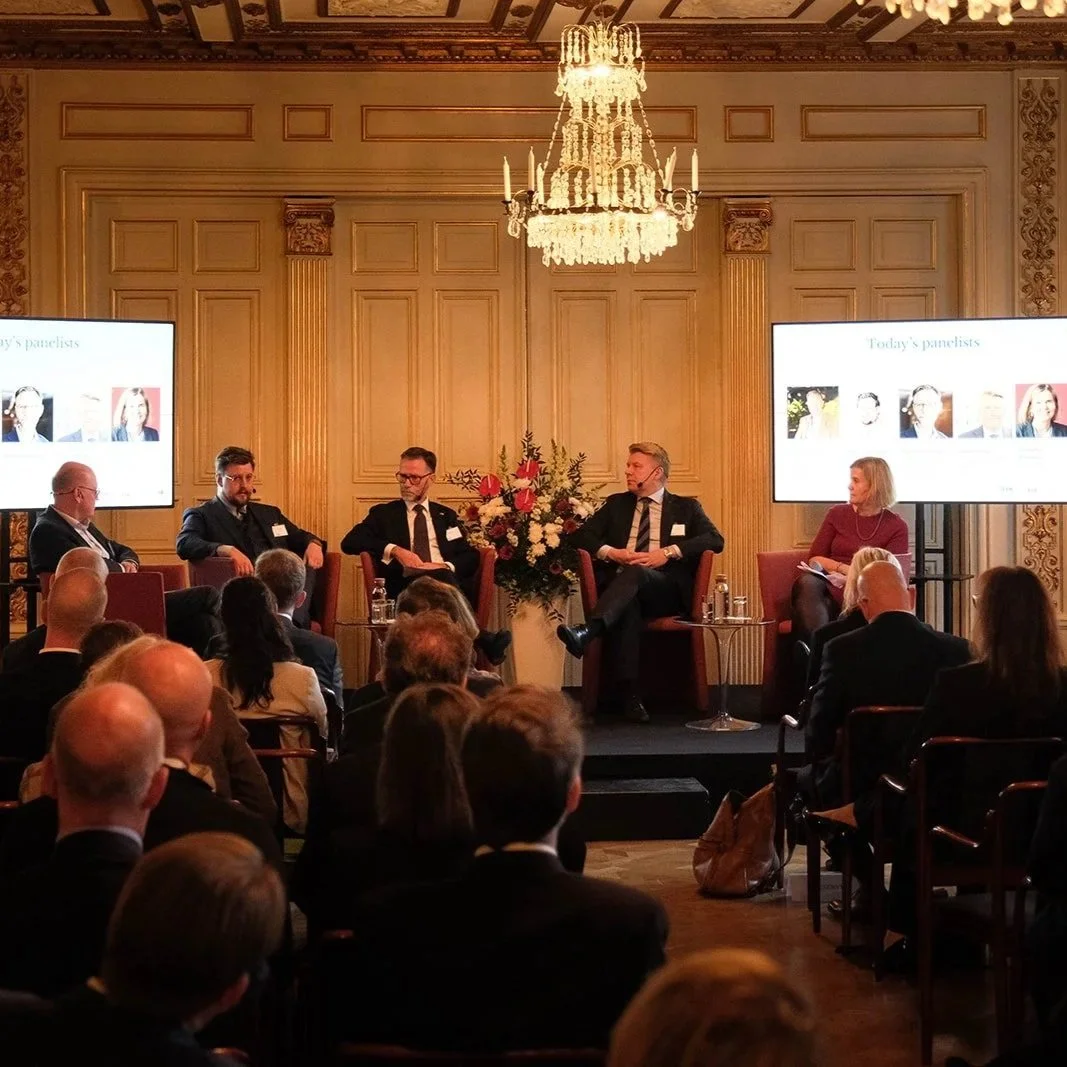
Our panel brought together representatives from critical sectors – WSP on infrastucture, Saab for defence, Nokia for telecommuications and AstraZeneca for healthcare. Each came at resilience from a different angle.
Our moderator Elizabeth Walentin with the panel (from left to right: Anders Persson (AstraZeneca), Markus Holmgren (Nokia), Fredrik Gustafson (Saab) and Daniel Isberg (WSP).
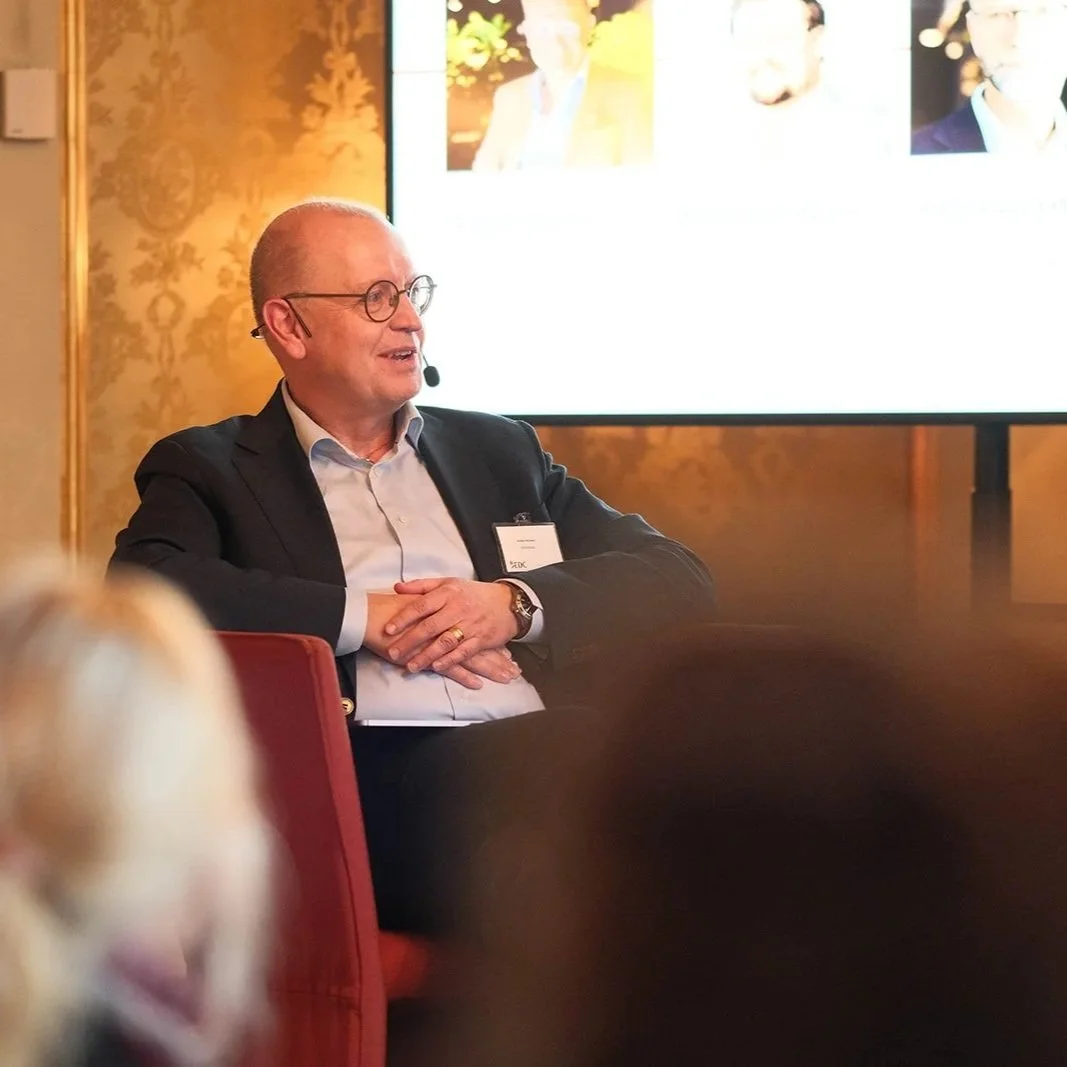
AstraZeneca’s Anders Persson was the most direct: their job is to get things done, whatever the situation, and to contribute to society while they do it.
A society needs a resilient system to supply itself, and expectations on supply chains are rising accordingly: deliver even in a crisis. They also called for better laws. Permitting timelines for a new factory are far too long for the pace that is now needed.
– Anders Persson, Head of Eco-system Strategy & Projects, AstraZeneca
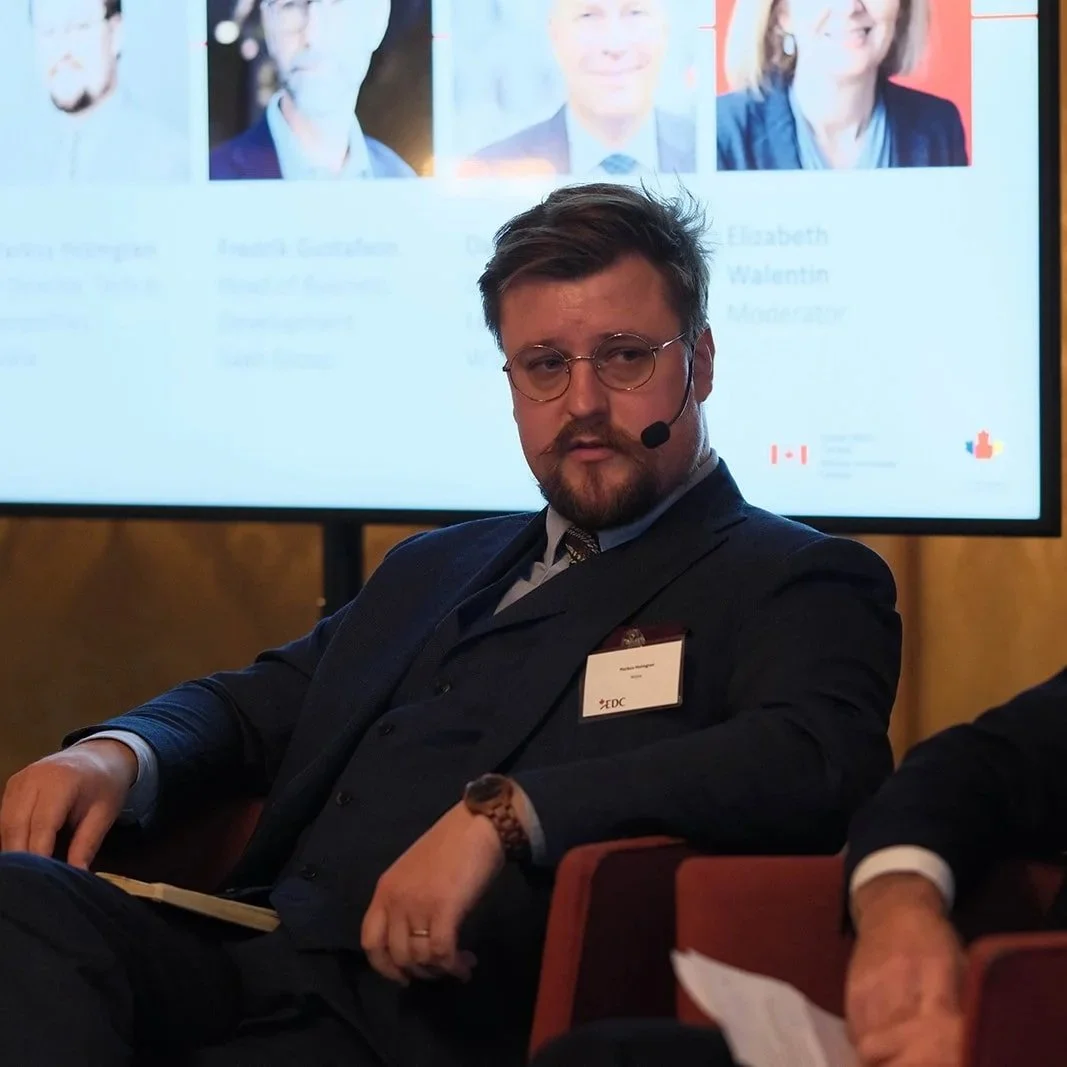
There are very few military functions that do not depend on connectivity. They also flagged a dependency worth reflecting on: around 75% of AI production comes from the US and 15% from China.
– Markus Holmberg, Senior of Geopolitics and Technology, Nokia
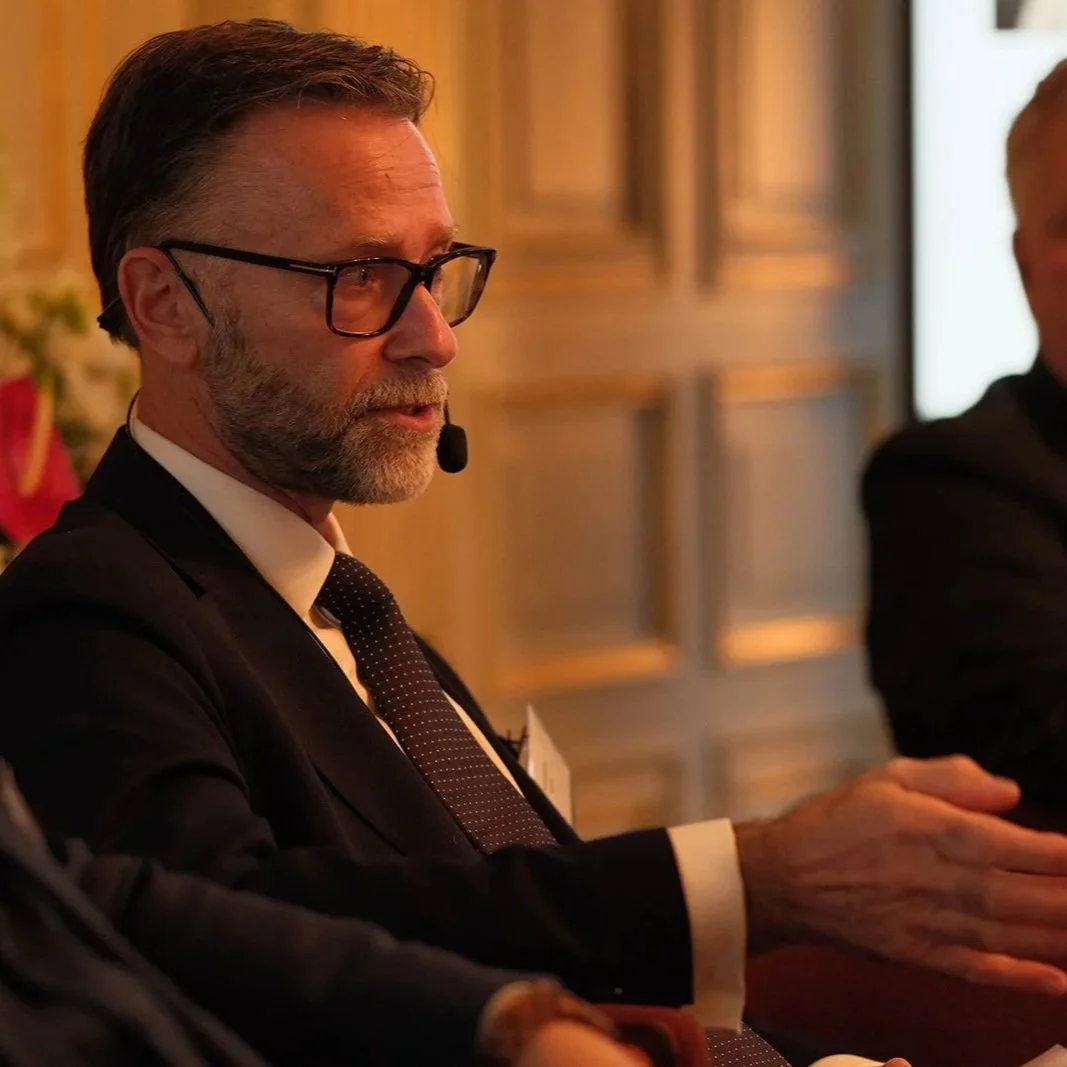
Saab requires security of supply from all its suppliers, and advised that each company should bring the full value chain into the same room to explore roles, responsibilities and weak points.
– Fredrik Gustafson , Head of Business Development, Saab Group
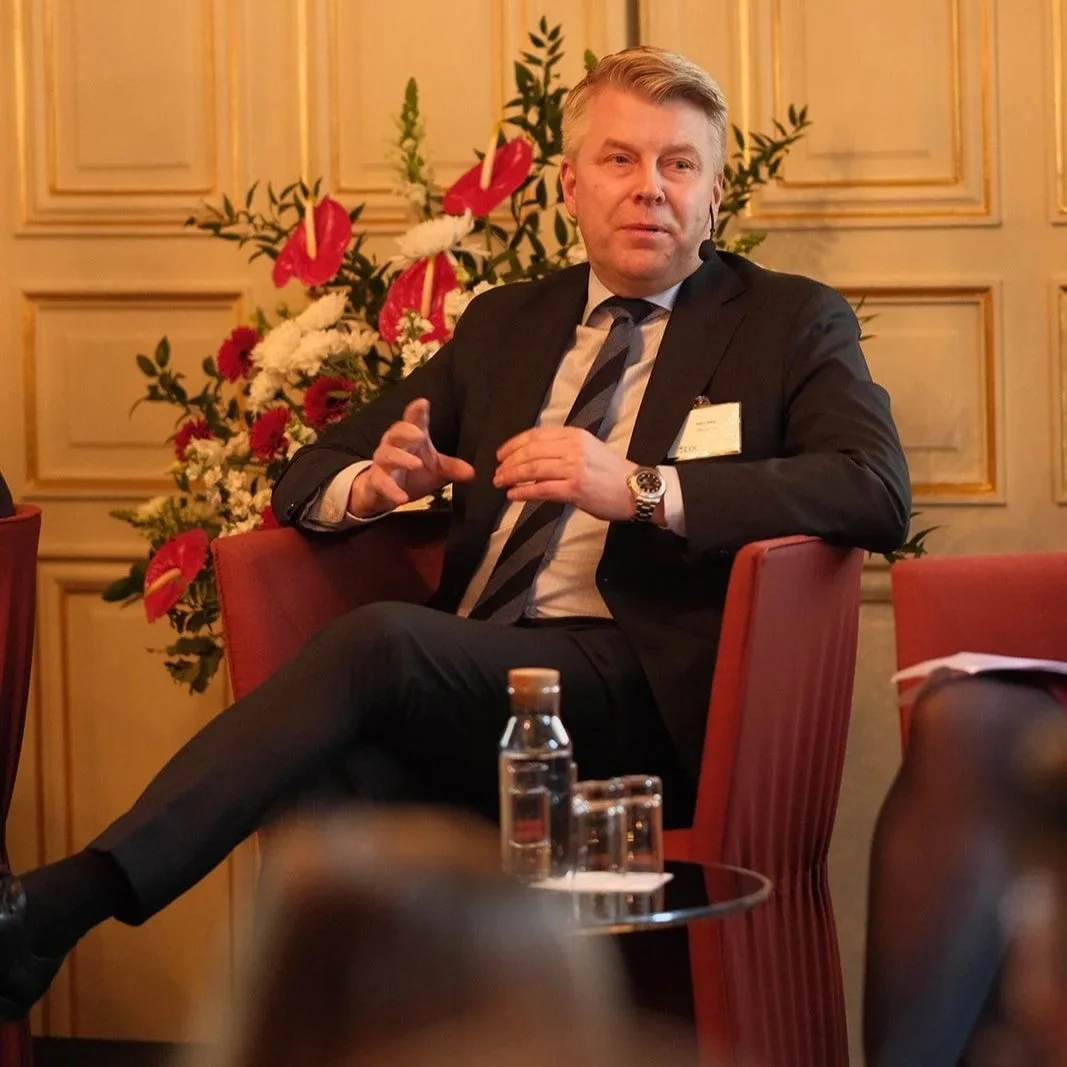
“We need a resilient system to supply ourselves. This is the experience from Ukraine.” Sweden is making major investments in energy, infrastructure and defence, but we need to move faster from plans to implementation. As a Canadian company with a large footprint in Sweden, Isberg was able to pinpoint the shared challenges between Sweden and Canada. With similar investment strategies in energy, infrastructure, and defence.
– Daniel Isberg, Defence and security, WSP